

Mokumeganeya’s Pursuit of Innovation in Metalworking and the Creation of New Value
2025.12.10
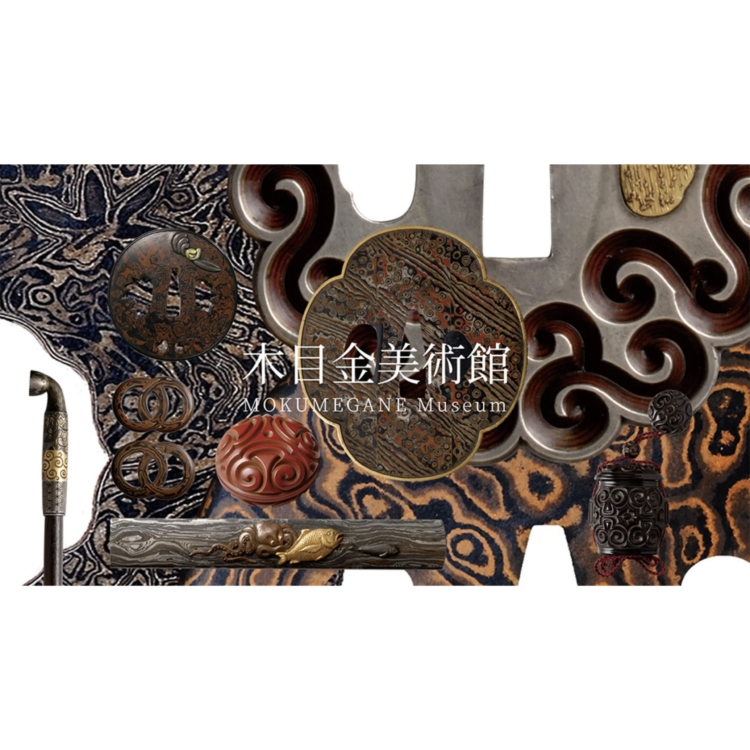
FASHIONMokumeganeis a Japanese metalworking technique that creates woodgrain patterns by combining metals of different colors. Mokumeganeya applies this technique—originally developed in the Edo period and primarily used for sword guards (tsuba)—to jewelry making. Because each woodgrain pattern created by hand is unique, these pieces are especially popular as made-to-order jewelry to mark special occasions. Alongside its jewelry production, Mokumeganeya also conducts research intomokumeganetechniques and, in 2023, launched the online MOKUMEGANE Museum.
Masaki Takahashi, representative director of Mokumeganeya, also leads the Japan Mokumegane Research Institute, an NPO he founded in 2003. There, he conducts research onmokumeganeworks held in overseas art museums and institutions, studying and reproducing pieces of significant archaeological and technical value. This research involves recreating the production processes of the time as faithfully as possible, including reproducing the original tools. In some cases, he even makes chisels from scratch to match the carving marks on the original pieces. “Through these traces of tools, I can sense not only the intentions of the original creator but also their sensibility and spirit. What appears at first to be a randomly arranged series of ovals on a sword guard actually demands highly advanced skill to reproduce—I was struck by the depth of the artist’s intention,” says Takahashi.
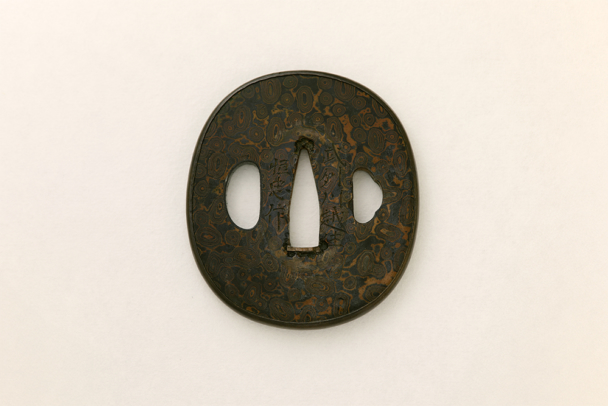
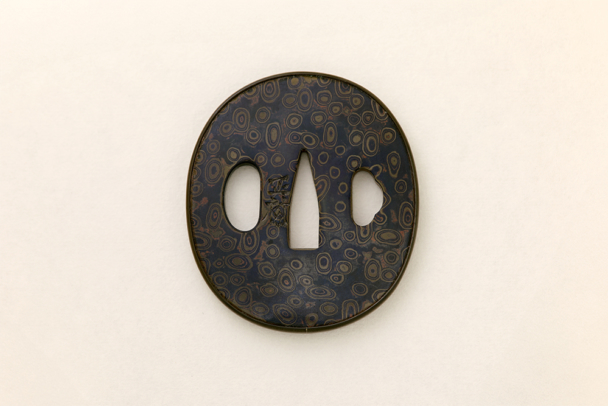
Left: Tsuba with woodgrain pattern (mokumegane); copper, shakudo, and shibuichi signed “Made by Tsunetada, a resident of Kawagoe, Musashi Province,” late Edo period. Right: Reproduction tsuba, mokumegane and other materials, signed Masaki for research, 2022. Collection of the Japan Mokumegane Research Institute.
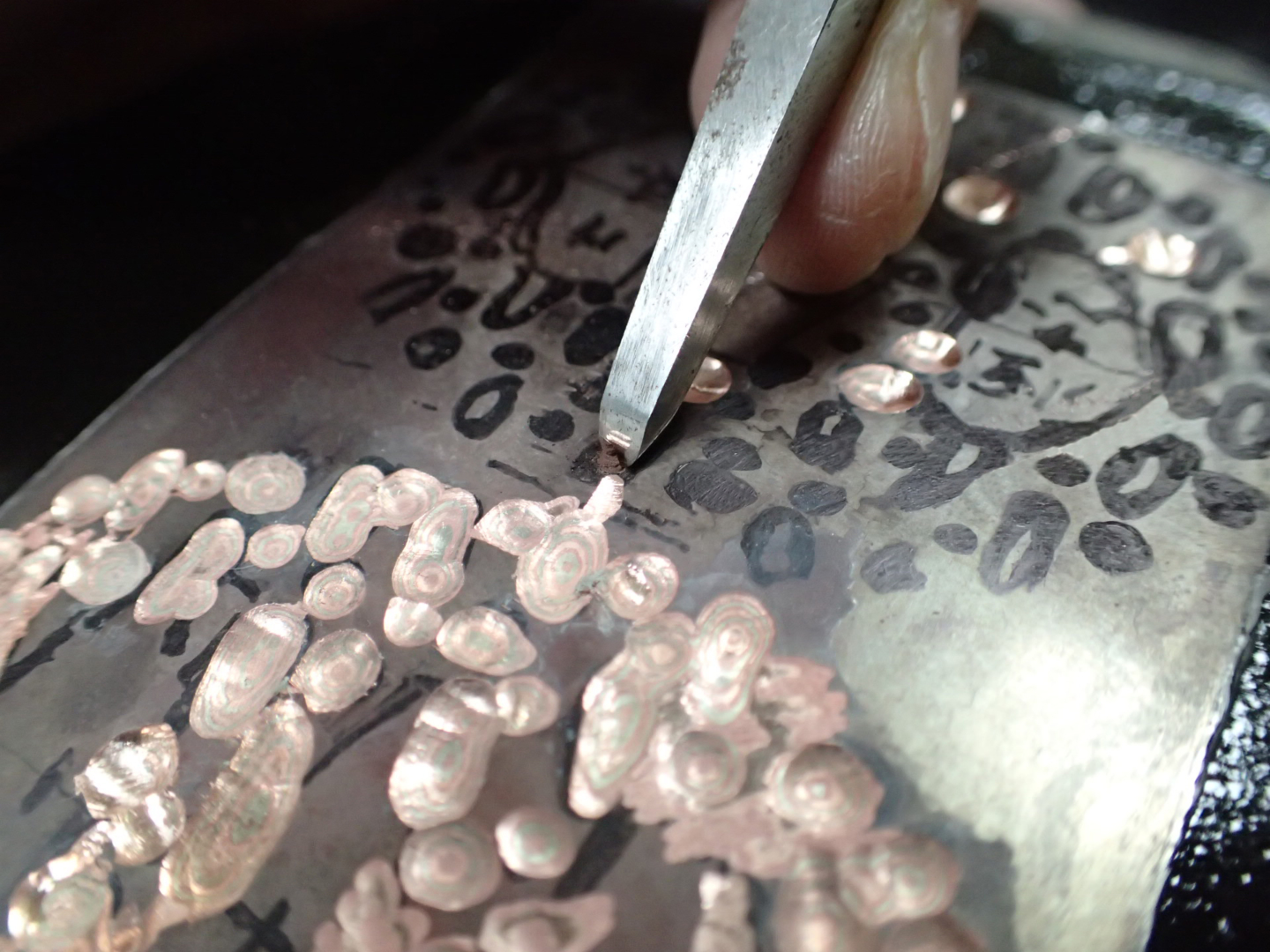
The engraving process using chisels. The layered metal pattern emerges where the metal has been carved.
Believing that the most important factor in passing down traditional techniques is for them to remain part of people’s everyday lives, Takahashi has made it his principle to create things that serve a purpose in daily living. He regards both the jewelry offered to customers at Mokumeganeya and the reproduction works produced for research as genuine artworks.
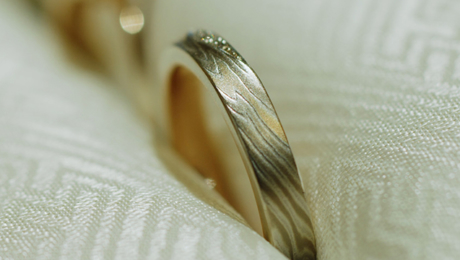
One example is Mokumeganeya’s Tsunagaru-Katachi (Linked Shapes) wedding ring, in which a couple divides a single connected ring featuring one continuous woodgrain pattern into two rings—an experience that adds the intangible value of shared memory. Through his reproduction research, Takahashi has mastered complex traditional skills, applying those results to Mokumeganeya’s jewelry design to infuse Edo-period techniques with new value and evolve them into works suited to modern lifestyles.
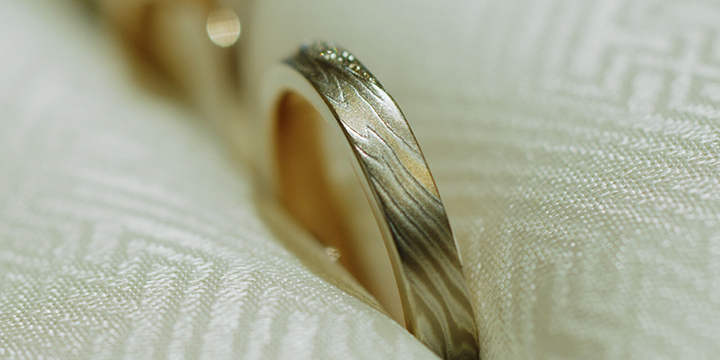
The Tsunagaru-Katachi (Linked Shapes) wedding ring, made-to-order by Mokumeganeya artisans.
Takahashi continues, “I believe that sharing Japan’s remarkable techniques with more people through the online museum is also essential for passing them on to the future.” At the MOKUMEGANE Museum, visitors can explore the history ofmokumeganeand view high-resolution images of how the technique was used in items ranging from sword guards to craft objects, with explanations designed to be accessible even to those encountering it for the first time.
As part of the Edo Tokyo Kirari Project, the online museum has also launched English and Traditional Chinese versions, integrated with Mokumeganeya’s corporate website. This initiative has opened the door to exchange with people around the world, attracting attention from students, researchers, artists, and craftspeople studying art and craftsmanship both in Japan and abroad. “Recently, I’ve been especially deepening my exchanges with overseas researchers. Their passion and depth of knowledge—not only aboutmokumeganebut about many aspects of Japanese culture—are truly inspiring,” says Takahashi.
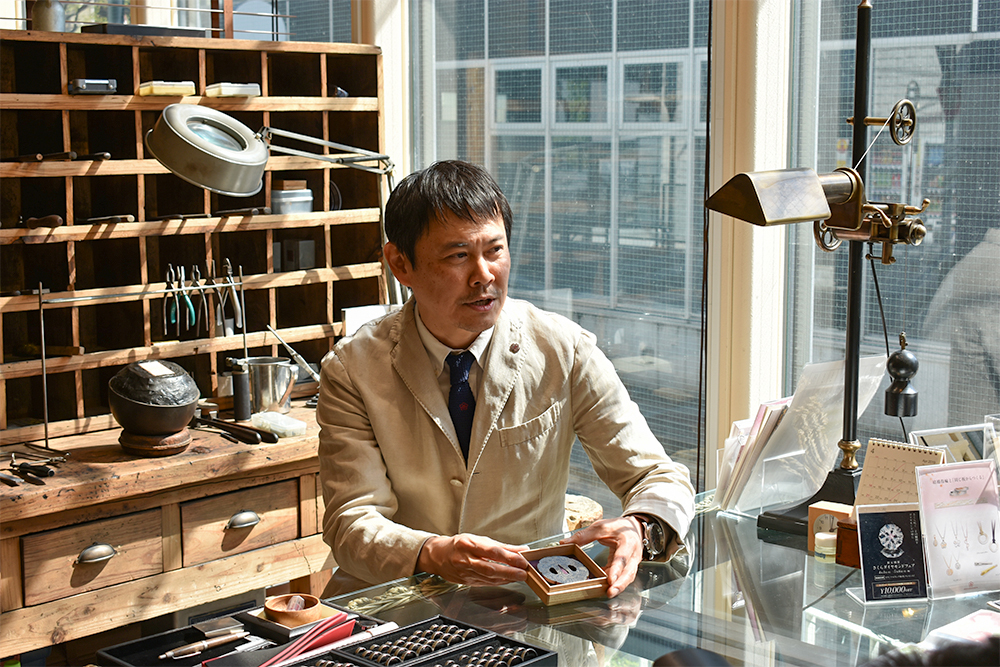
“The online museum is now an indispensable platform for sharing information. I want to further expand public awareness,” says Takahashi, adding that there are future plans to make it an interactive museum.
If you haven’t yet visited the MOKUMEGANE Museum, be sure to take a look—you’ll gain an even deeper appreciation of the stories behind Mokumeganeya’s jewelry.
■MOKUMEGANE Museum
https://mokumegane-japan.com/en/museum.html