
A New Take onYukata Culture: Sankatsu’s Vision for Lifestyle Design
2026.03.02
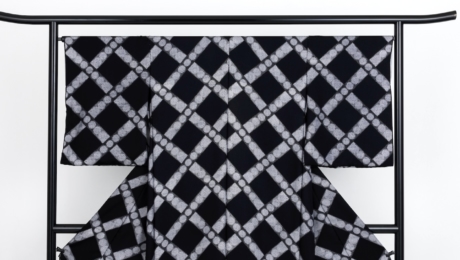
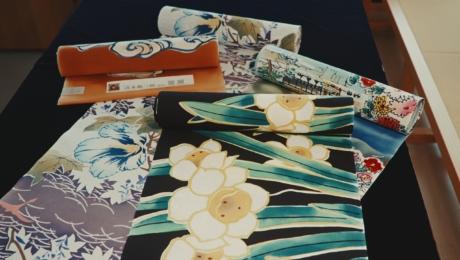
FASHIONFounded in Ningyocho in 1894, Sankatsu is a yukata specialist renowned for its chusen dyeing techniques. Now, fourth-generation head Hanshichi Amano is taking on new initiatives to carry yukata culture into the future.“At Sankatsu, we have long produced each yukata by commissioning fabric, stencil patterns, and dyeing work from artisans across Japan. When production came to a halt during the COVID-19 pandemic, I took another look at the more than 20,000 stencil patterns resting in our warehouse and realized that they contained an extraordinary wealth of designs unlike anything else in the world. That was when I began thinking about how to revive them in a new, contemporary way,” Amano explains.
In 2024, the company reopened the Sankatsu Yukata Museum, located on the basement floor of its head office, following a renovation. The museum exhibits valuable materials including Ise katagami stencils, chusen and nagaita chugata dyeing references, bolts of fabric, and works by Living National Treasure Kotaro Shimizu. Recently, many visitors, including travelers encountering the profound world of artisan-made yukata for the first time, have been drawn to visit. Sankatsu has also since introduced the interior series Shitsurai, as well as Fui, an apparel series designed to be enjoyed year-round. Internationally, the company has participated in Fashion Week Brooklyn (FWBK), known as a platform where designers present collections reflecting social themes, and has also undertaken limited-time collaborations with accommodations located within the Oki Islands UNESCO Global Geopark. These initiatives allow Sankatsu to actively communicate the appeal of yukata textiles in forms suited to contemporary lifestyles.
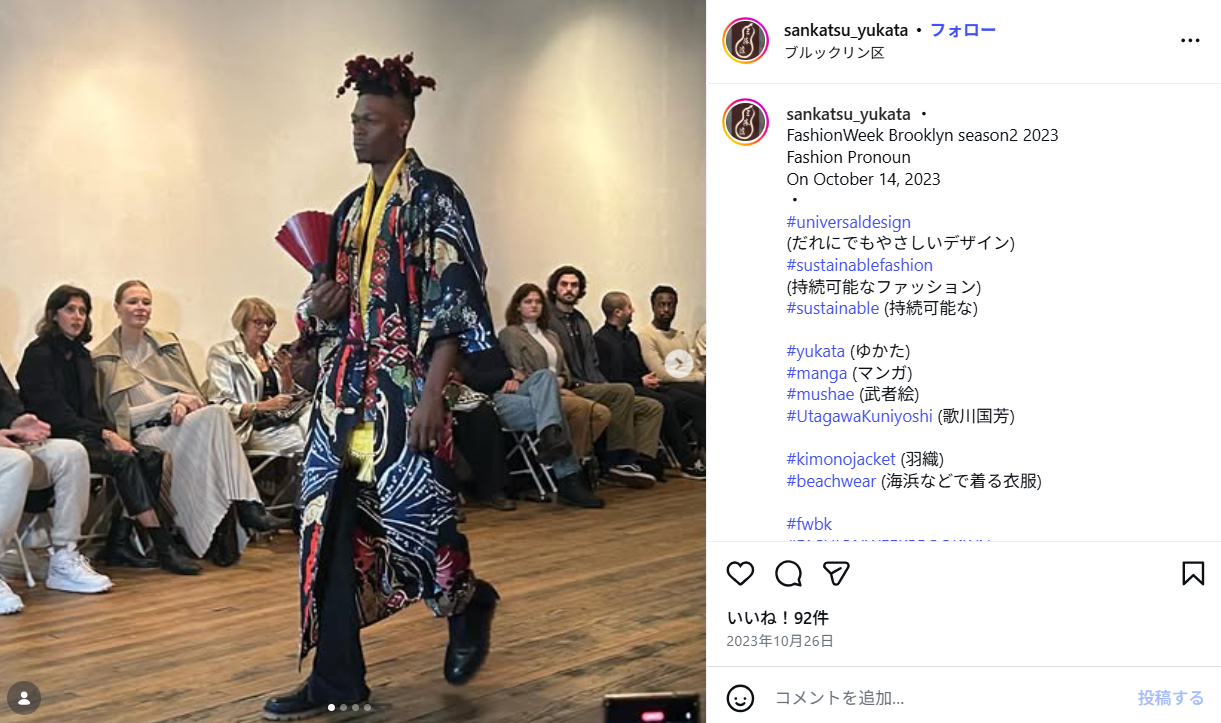
Information on exhibitions, events, and collaborations is shared regularly via Instagram (@sankatsu_yukata).
“There is so much we want to convey—about chusen dyeing, which is our specialty, and about the regions where these techniques are practiced,” says Amano. “As a starting point, we are proposing ways to incorporate traditional yet fresh yukata designs into everyday life through lifestyle design.” In December 2025, Sankatsu held the exhibition Sankatsu Kinsei: New Forms of Japanese Aesthetics, reinterpreting yukata designs from both artistic and lifestyle perspectives. The exhibition was held at the Hyakunen Gallery, located at the front of the company’s head office, alongside the public opening of the Sankatsu Yukata Museum.
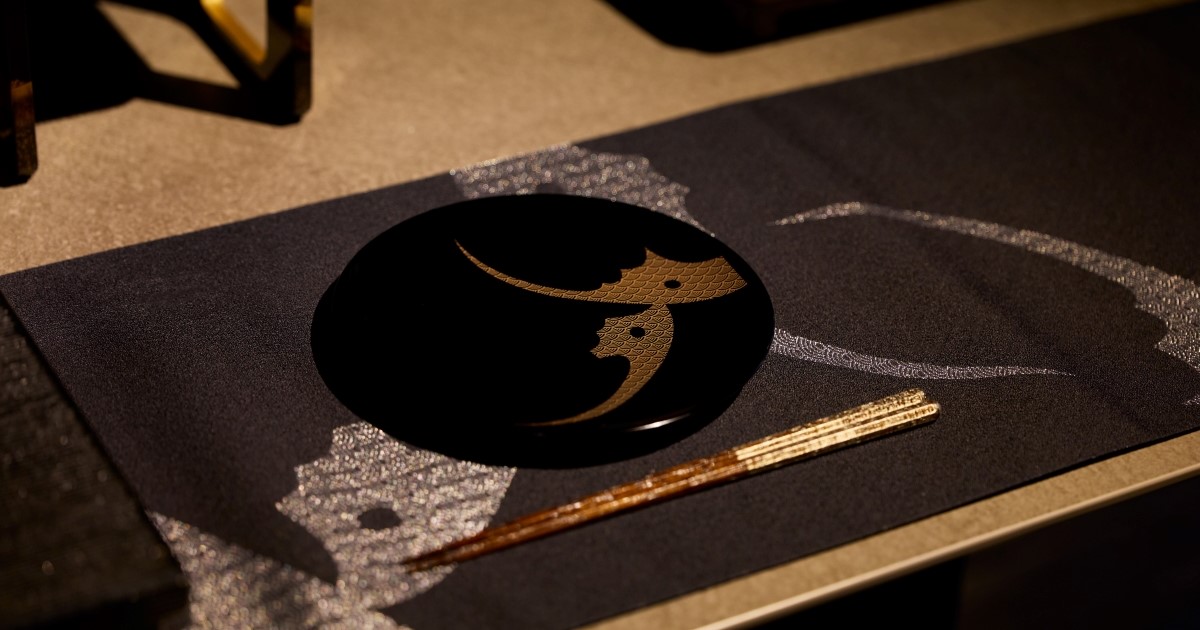
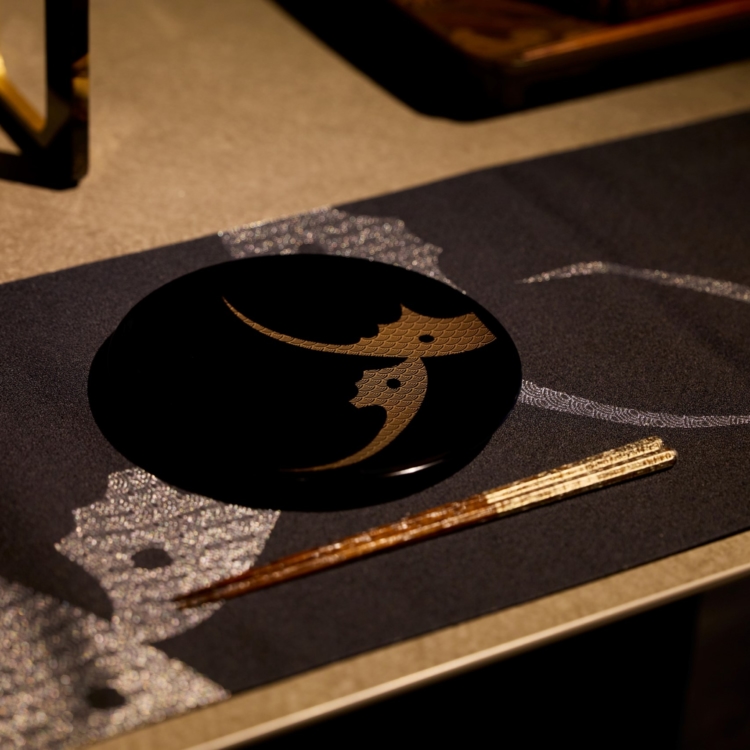
One example featured a dining room coordinated around lacquerware created in collaboration with Yamada Heiando, a lacquerware brand that serves the Imperial Household Agency. The lacquer pieces, adorned with the traditional taichutai stencil motif rendered in gold and silver lacquer work, emanated with refined presence in the softly lit space. “Taichutai is one of Sankatsu’s most popular motifs,” Amano explains. “In the Edo period, the small bone found between a sea bream’s pectoral fin and gills, which resembles the shape of a sea bream itself, was regarded as an auspicious charm. Combined with the propitious seigaiha wave pattern symbolizing layered good fortune, the taichutai design embodies wishes for lasting prosperity and tranquility. Stories like this can become conversation starters among family and friends gathered around the table. And above all, when used to present celebratory dishes, they bring added elegance to special occasions such as New Year gatherings.”
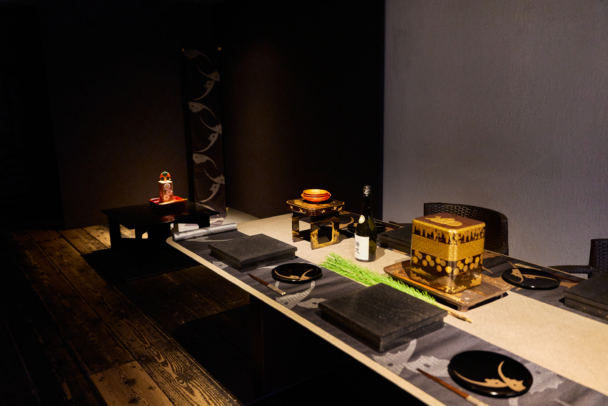
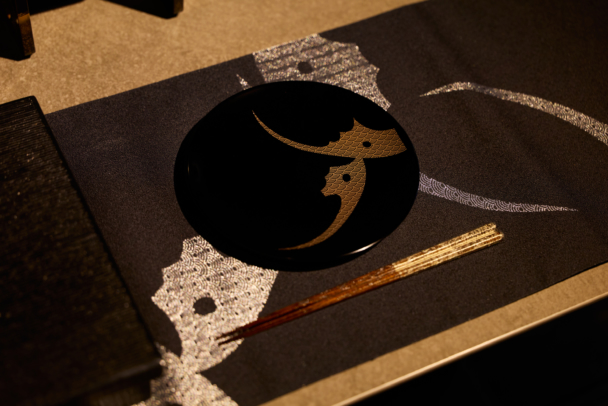
Sankatsu Kinsei Lacquerware Taichutai was presented as part of a celebratory table setting together with a table runner featuring the same motif. Not only functional as tableware, the pieces are also beautiful as decorative objects.
The exhibition also introduced living rooms and bedrooms coordinated under the Shitsurai series, which applies yukata fabrics to modern interiors such as cushion covers, lighting shades, partitions, and even surfboards, and the bold patterns and colors unique to yukata, such as designs featuring white herons with wings outstretched, harmonized with contemporary furniture to create elegant Japanese-modern spaces.
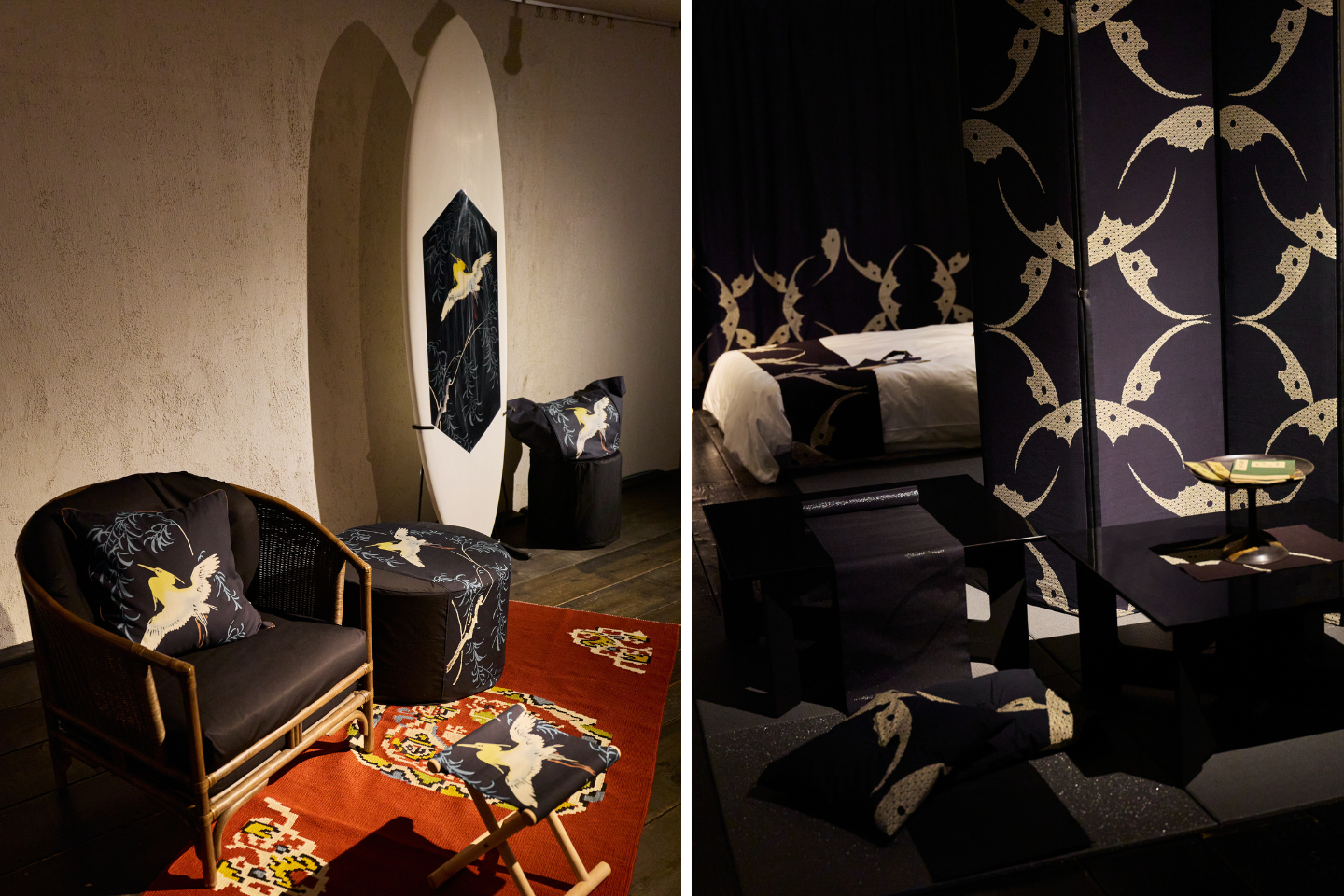
Left: A sophisticated living room arrangement, with the surfboard serving as a striking art-like presence.
Right: A partition adapted from taichutai fabric. By combining motifs not traditionally paired in yukata, a fresh new design emerges.
Right: A partition adapted from taichutai fabric. By combining motifs not traditionally paired in yukata, a fresh new design emerges.
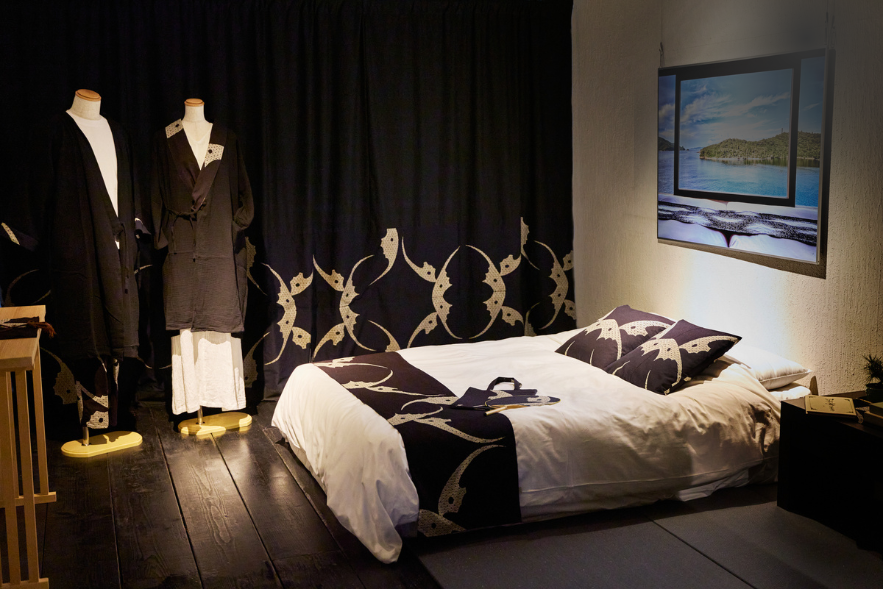
In the bedroom,taichutai textiles stand out beautifully under subdued lighting, creating an effortlessly stylish atmosphere. Relaxation wear from the Fui series (rear left) is a new addition.
Having operated in Ningyocho for 130 years, Sankatsu is now exploring a sustainable future for yukata culture as it looks toward the next century. “Traditionally, cotton yukata were worn for many years, first altered as needed, then eventually repurposed into cleaning cloths, and used until the very end without waste. Because they are made from natural fibers, they are also environmentally friendly, returning to the soil under appropriate conditions due to their biodegradable properties,” Amano says. “We want more people, both in Japan and abroad, to understand these qualities. That is why we advocate a concept of ‘yukata × lifestyle design,’ while honoring the aesthetic sensibility and sustainability mindset long held by the Japanese, and continuing to preserve traditional craftsmanship and yukata culture.”
As part of further developing this vision, Sankatsu is currently working through the Edo Tokyo Kirari Project on special “art yukata” and new lifestyle design products. These will be unveiled at the Hyakunen Gallery located at the front of the Sankatsu headquarters building. Visitors will also have the opportunity to view historical exhibits, including rare stencil patterns that survived the air raids of World War II—a truly valuable occasion not to be missed.
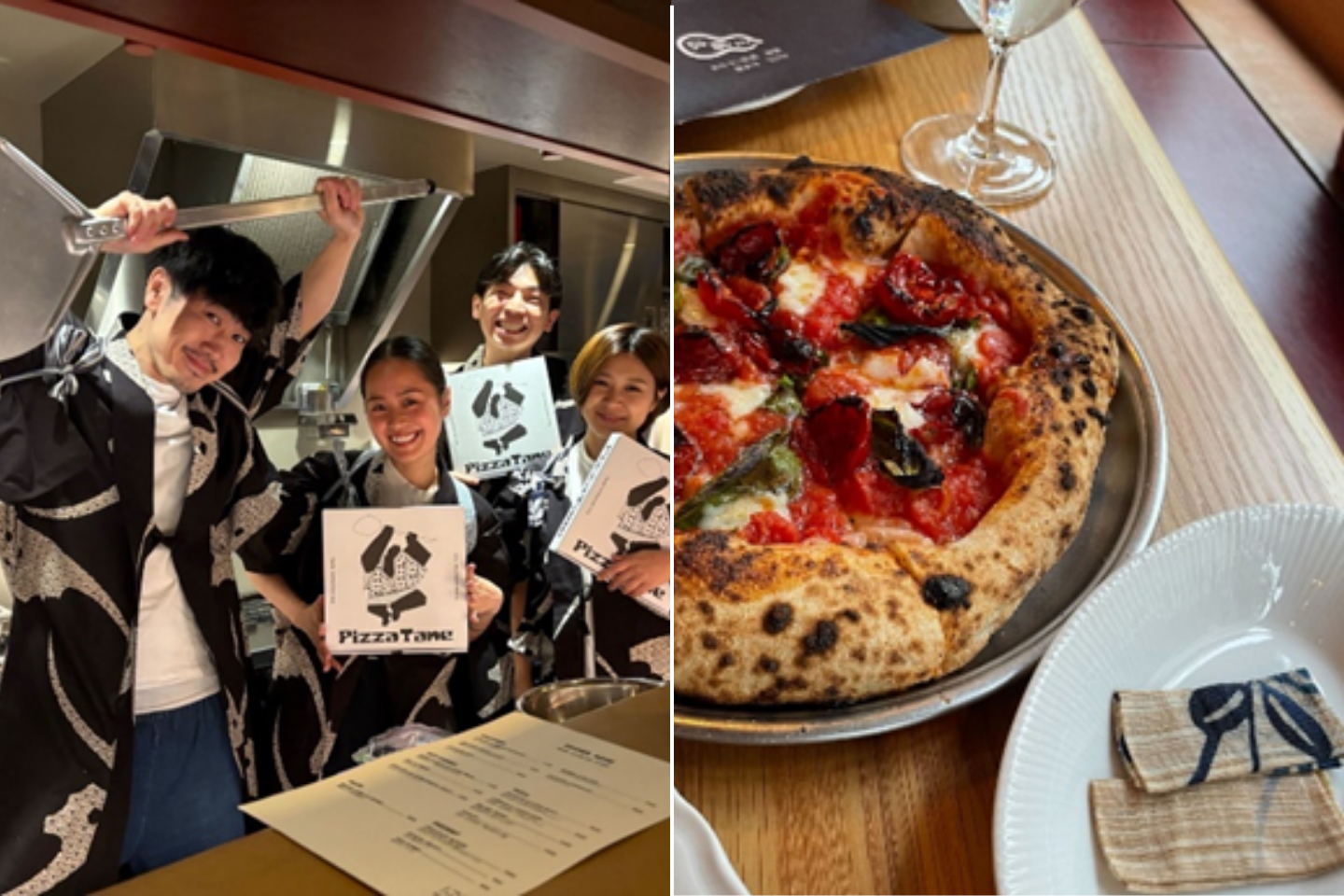
In addition, oshibori hand towels made from leftover yukata fabric have been provided for a limited time to Pizzeria Pizza Tane, located on the first floor of SOIL Nihonbashi Hotel, which opened in September 2025 just a two-minute walk from Sankatsu’s head office. Through collaborations with companies across various industries, Sankatsu continues to expand its lifestyle design initiatives. (Photo courtesy of SOIL Nihonbashi Hotel)