
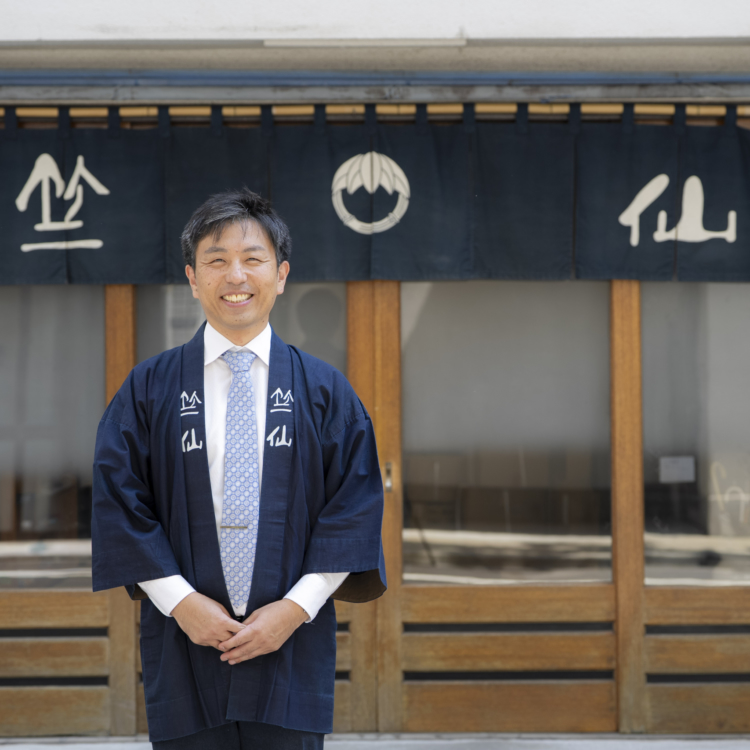
Carrying Edo’s aesthetic into the future: The discerning eye behind Chikusen’s craftsmanship
2026.10.19
FASHIONFounded in 1842, the 13th year of the Tempo era in the late Edo period, kimono fabric merchant Chikusen continues to make yukata and “Edo komon” patterned kimono while preserving the dyeing stencils and artisanal skills passed down from the Edo and Meiji periods. We spoke with President & CEO Shigeyuki Ogawa about how the company is carrying this aesthetic heritage and the spirit behind it into the future.
Iki hitogara: The essence of Chikusen’s aesthetic
Ogawa joined Chikusen from another industry when he was 28 years old. He had been struck by the way the company continued to make its products by hand, even in a metropolis like Tokyo. Asked what Chikusen has inherited from its predecessors, he answers with the phrase iki hitogara, a mind to explore Edo chic.
“For generations, we have described Chikusen’s dyeing as ‘iki hitogara.’ Everyone has their own sense of iki, or chic, but we believe that this one phrase expresses everything about Chikusen’s dyed textiles. We cherish the aesthetic handed down from Edo: refined beauty that does not follow fleeting trends, clean lines, and designs stripped of the unnecessary. At the same time, we keep refining that aesthetic to suit the times. That is what iki means to us.”
At the time, yukata were gradually evolving from plain white or solid-colored garments to include patterns. Chikusen’s founder, Sennosuke, drew on the stencil-dyeing techniques he had developed for komon to create indigo-dyed yukata depicting flowers, plants, and seasonal motifs. Their fresh, uncluttered designs quickly won acclaim, and these chic yukata are said to have enlivened the culture of Edo’s townspeople.
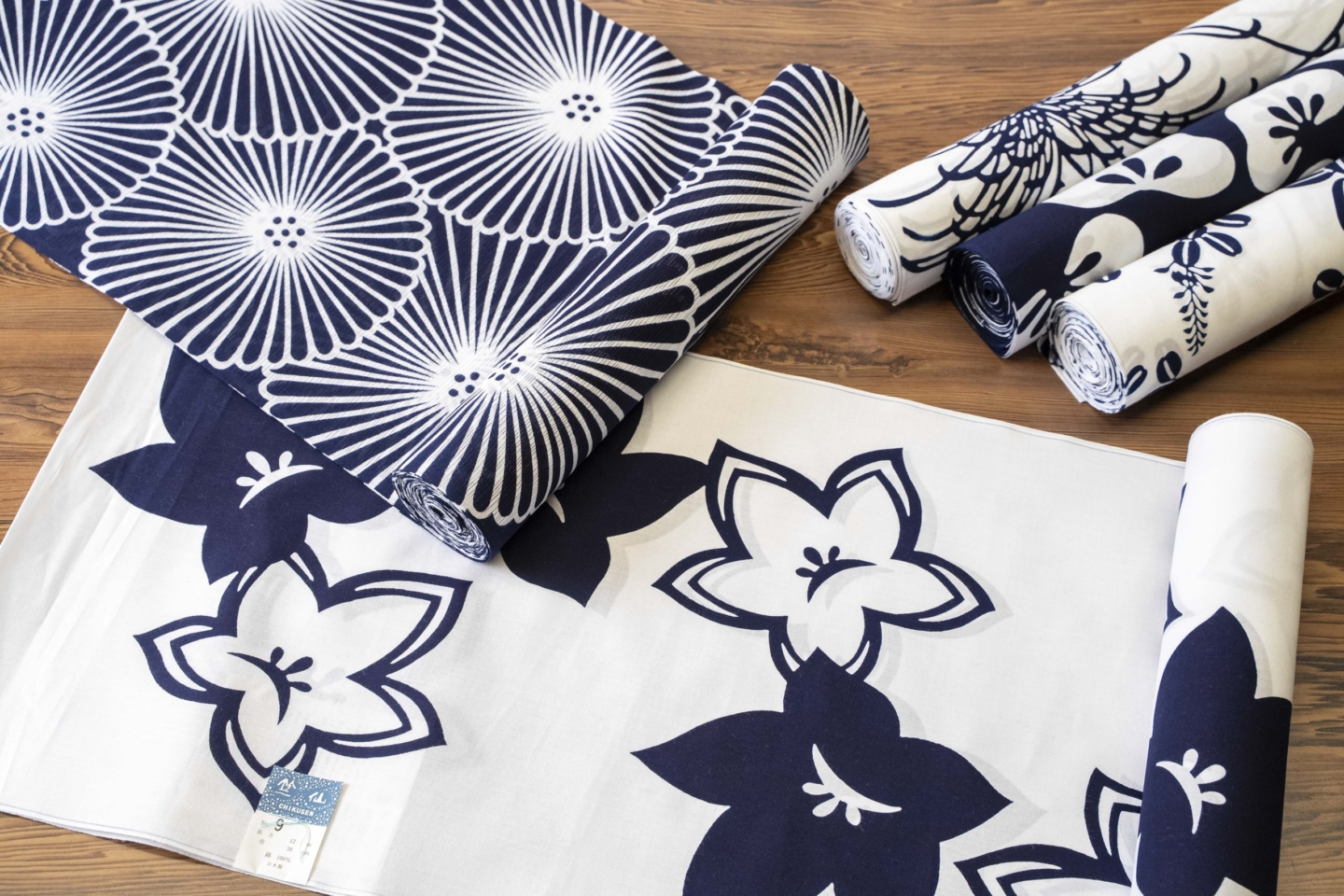
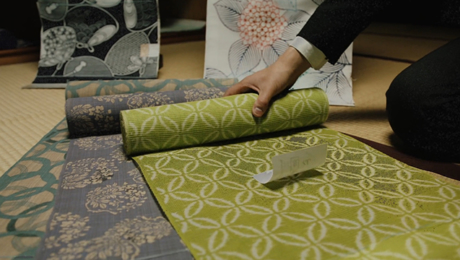
Bolts of Chikusen yukata fabric feature chrysanthemums (left), bellflowers (center) and other motifs drawn from everyday life and the seasons in Edo. The designs embody iki in every detail.
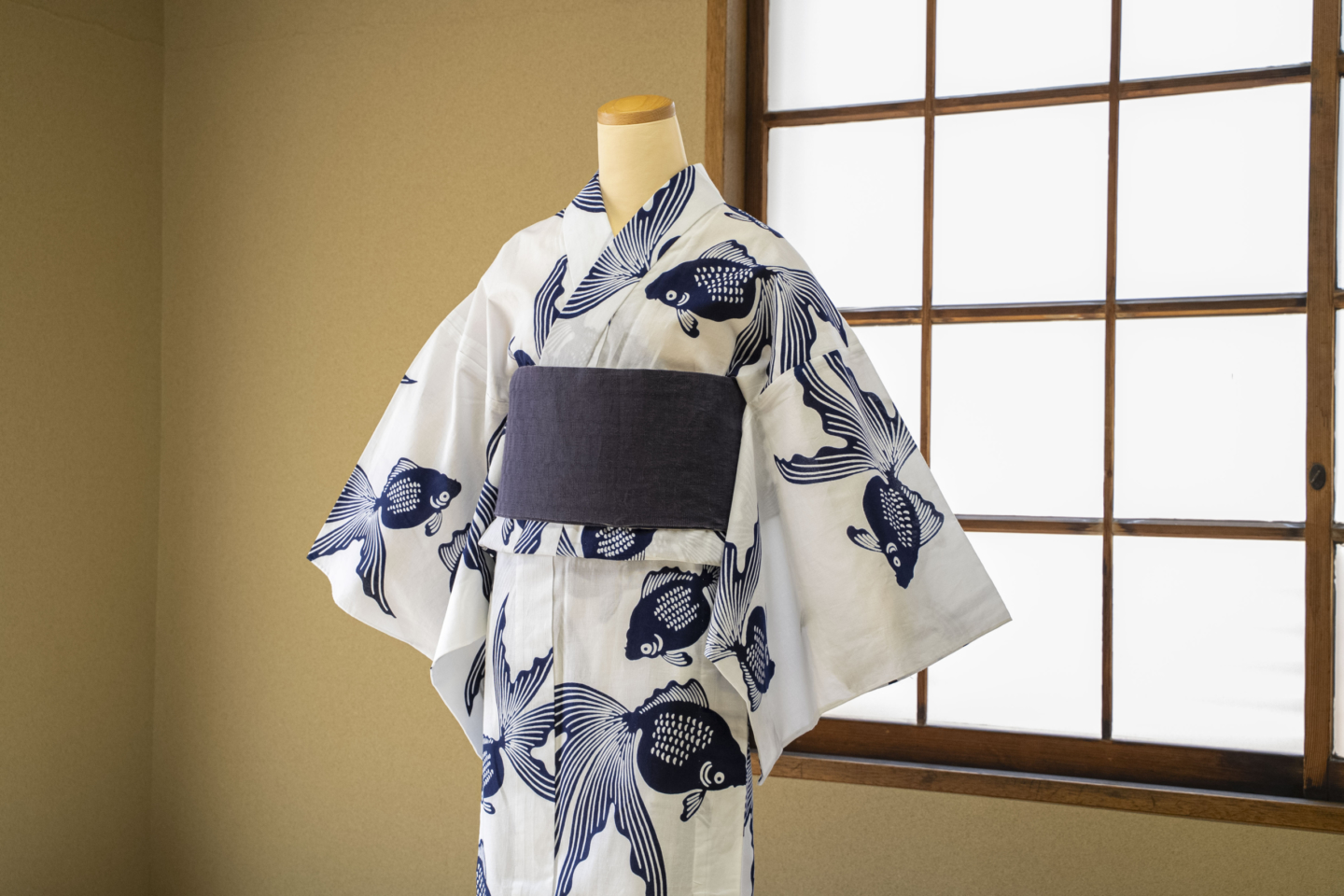
Chikusen creates around 1,000 patterns each year. Its commitment to using its own original fabrics, including combed cotton, brings a rich variety of effects to its designs.
Yukata and “Edo komon” patterned kimono are Chikusen’s signature products. Edo komon is distinguished by delicate patterns that originated in kamishimo, the formal attire worn by samurai. Artisans use dyeing stencils to dye each bolt by hand. Chikusen preserves these stencil-dyeing techniques while overseeing every stage from product planning and production to sales, taking full responsibility for the quality of its work. That commitment is embodied in the four Japanese characters of Chikusen Kansei, the company’s mark of quality.
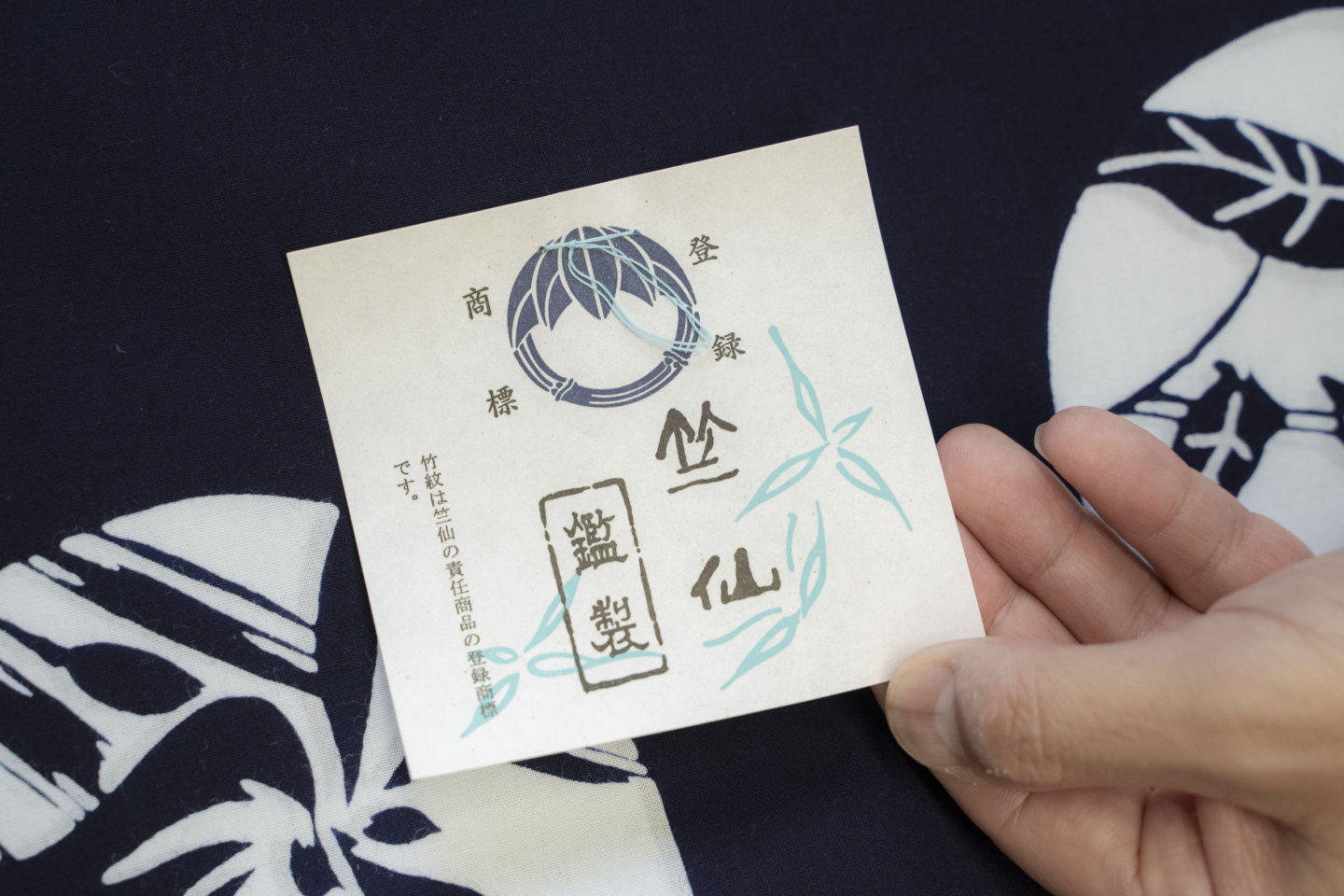
Chikusen Kansei expresses the company’s commitment to quality. A certificate is sewn onto its yukata fabric, while the mark is dyed directly into each bolt of Edo komon.
“The character ‘kan’ means a model of excellence and expert judgment. To me, the phrase is a pledge to make products that serve as a benchmark, not just for our customers but for others as well.”
Chikusen Kansei goes beyond a simple indication of quality. It expresses a determination to uphold standards that others can look to as a model, a principle that continues to guide Chikusen’s craftsmanship.
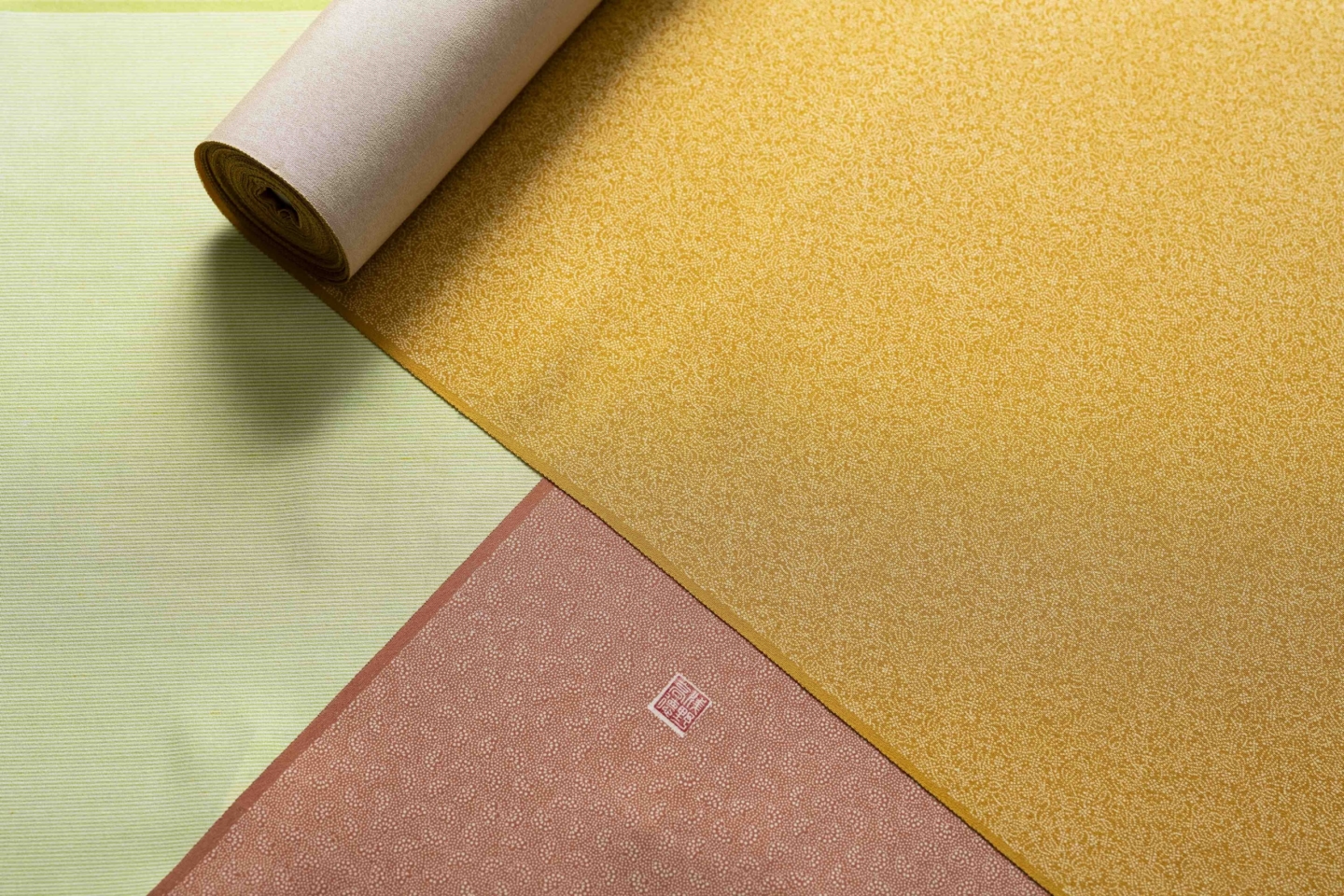
Edo komon appears to be a solid color from a distance; its delicate patterns reveal themselves up close.
Trust with artisans that sustains Edo’s dyeing traditions
No single artisan can make a bolt of Chikusen fabric alone. Weavers, pattern designers, stencil carvers, and dyers combine their specialized skills to create the finished cloth. This division of labor has kept a range of hand-dyeing techniques alive, from Nagaita Chugata, which dates back to the Edo period and is used to dye fabric with only the color indigo, to Chusen, which uses both multiple colors and gradation, and Hikizome, where a brush loaded with dye is dragged along the fabric after the paste has been applied.
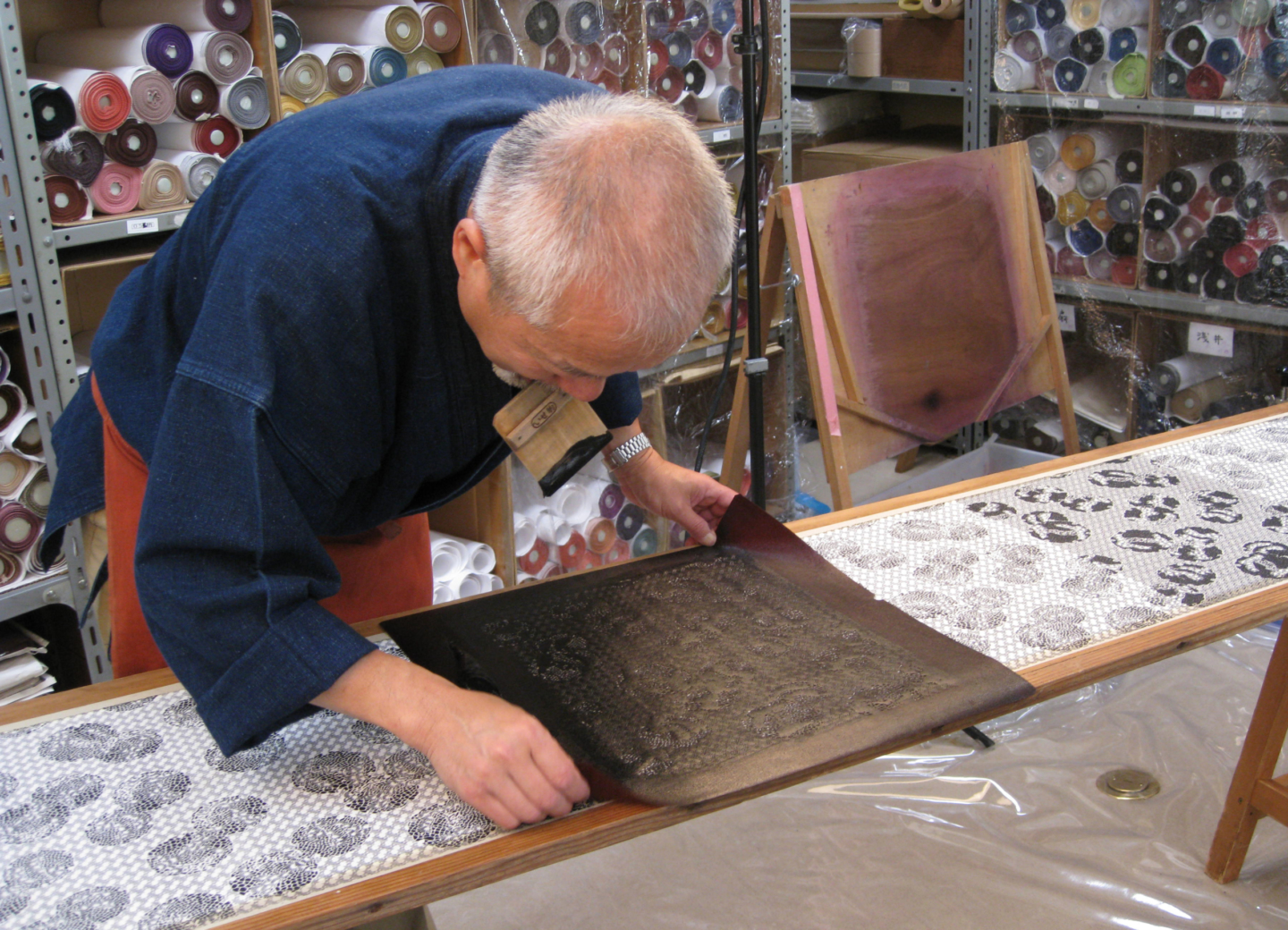
A preparatory stage in dyeing Edo komon: dye-resistant paste is applied through a stencil carved with intricate patterns.
Chikusen is said to retain thousands of dyeing stencils passed down from the Edo and Meiji periods. Yet its work goes beyond preserving them. Each year, it creates products featuring nearly 1,000 patterns, adapting traditional Edo designs to contemporary tastes and varying the colors and fabrics.
“We value the classics, but we also carefully review our patterns, colors, and fabrics with a contemporary sense of beauty in mind. Even with 100% cotton, the thickness of the yarn and the weave can dramatically change the texture, affecting what we call kiaji: how it feels to wear. Our pursuit of quality extends beyond appearance to how naturally and comfortably the fabric sits against the body.”
Close communication with artisans sustains that quality. Ogawa and his colleagues visit the workshops to discuss patterns, colors, and fabrics, working together with the makers to finish each bolt with care.
“We’ve built strong relationships of trust with all our artisans over many years. We make the standards we expect clear, and they are equally frank with us. By exchanging views openly, we help one another improve. I believe we earn that trust by continuing to offer work that makes them feel a Chikusen commission is worth taking on.”
With so many stages involved in making each piece, Chikusen will not release work that falls short of its standards. That, too, is the spirit of Chikusen Kansei.
Even as artisans are being trained to carry these techniques forward, new challenges are emerging around materials and tools. Ogawa is concerned about the effects of rising temperatures on the handling and mixing of materials in the workshops, as well as the difficulty of sourcing yarn, dyes, and other supplies amid changing world conditions. Whenever such problems arise, the artisans pool their knowledge and keep finding ways to maintain consistent quality.
New ways to carry Edo’s aesthetic into the future
Chikusen is eager to explore new ideas while preserving its traditions. Its participation in the Edo Tokyo Kirari Project has led to new products through collaborations with overseas designers. The collaborations build on CHIKUSEN dress, made from bolts of fabric, and Chikusen no Utsuwa, tableware with fabric sandwiched between layers of glass. These ventures attract new customers, many of whom discover an interest in yukata through the dresses. Some even have dresses made to wear abroad.
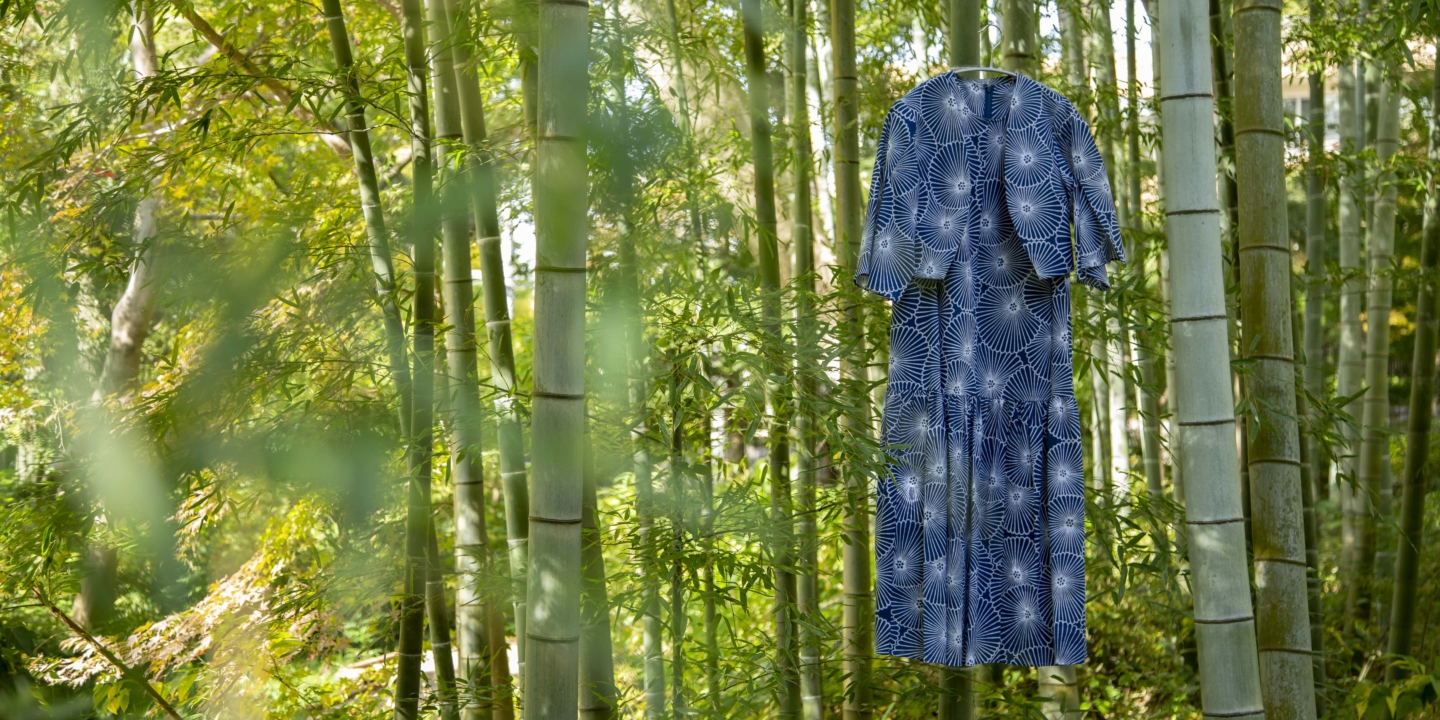
A CHIKUSEN dress made from fabric with a manju-chrysanthemum pattern offers a fresh way to bring Edo design into contemporary clothing.
“Simply asking someone unfamiliar with yukata to wear one will not get through to them. A dress or a piece of tableware, though, can introduce them to the appeal of our fabrics and designs. I would like young people to try wearing yukata without worrying too much about the proper way to do it. If it helps them discover the pleasures of traditional Japanese dress and the graceful way of moving that comes with it, I think we can build on that.”
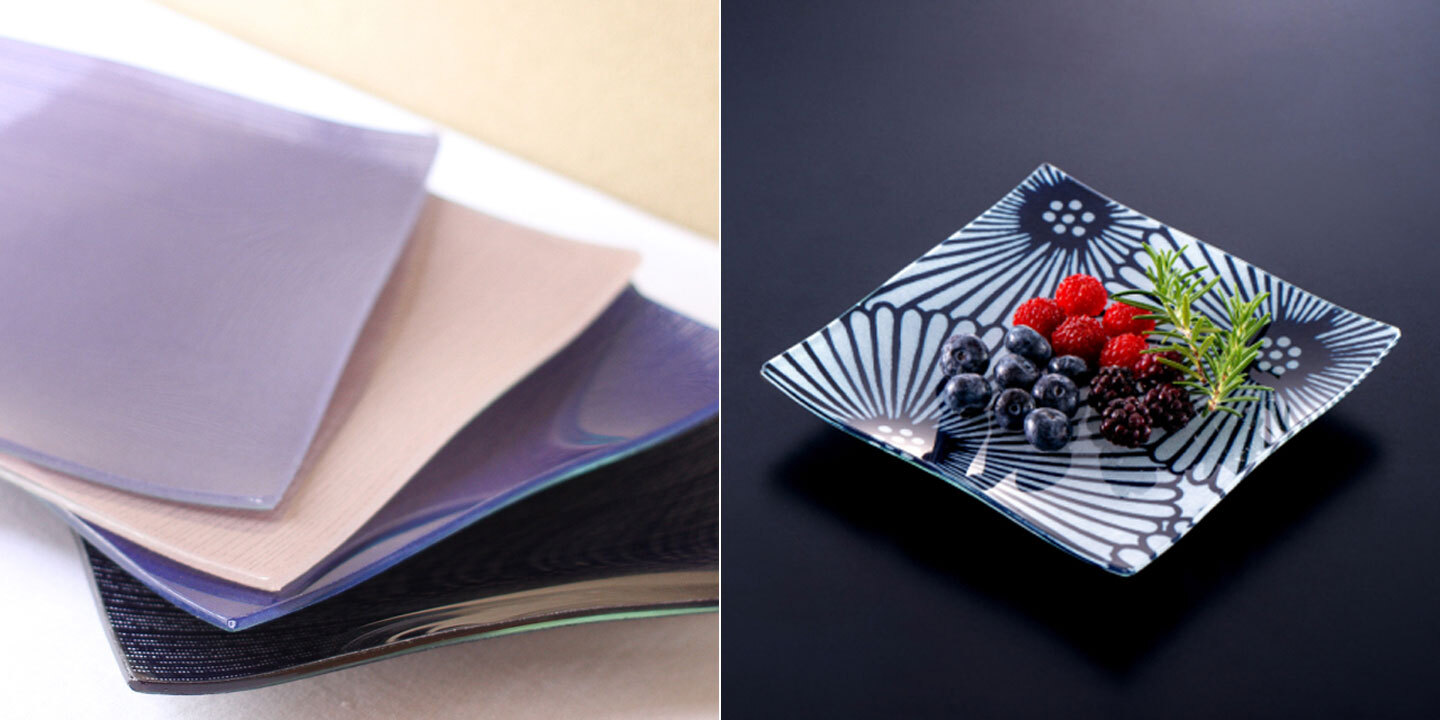
In Chikusen no Utsuwa, yukata fabric is sandwiched between layers of glass, with gently undulating edges reminiscent of the surface of water. Combed cotton fabric, woven from smooth yarn with minimal fuzz, and sheer cotton gauze fabric take on a new character in these pieces.
For all his enthusiasm for new projects, Ogawa places the greatest value on consistent quality.
“The hardest thing is to keep making products to the same standard. We have to maintain the quality our customers expect. Only with that foundation can we take on something new. By continuing to create work, we can support our artisans, help them refine their skills, and ensure those skills reach the next generation. I believe our role is to keep that cycle going.”
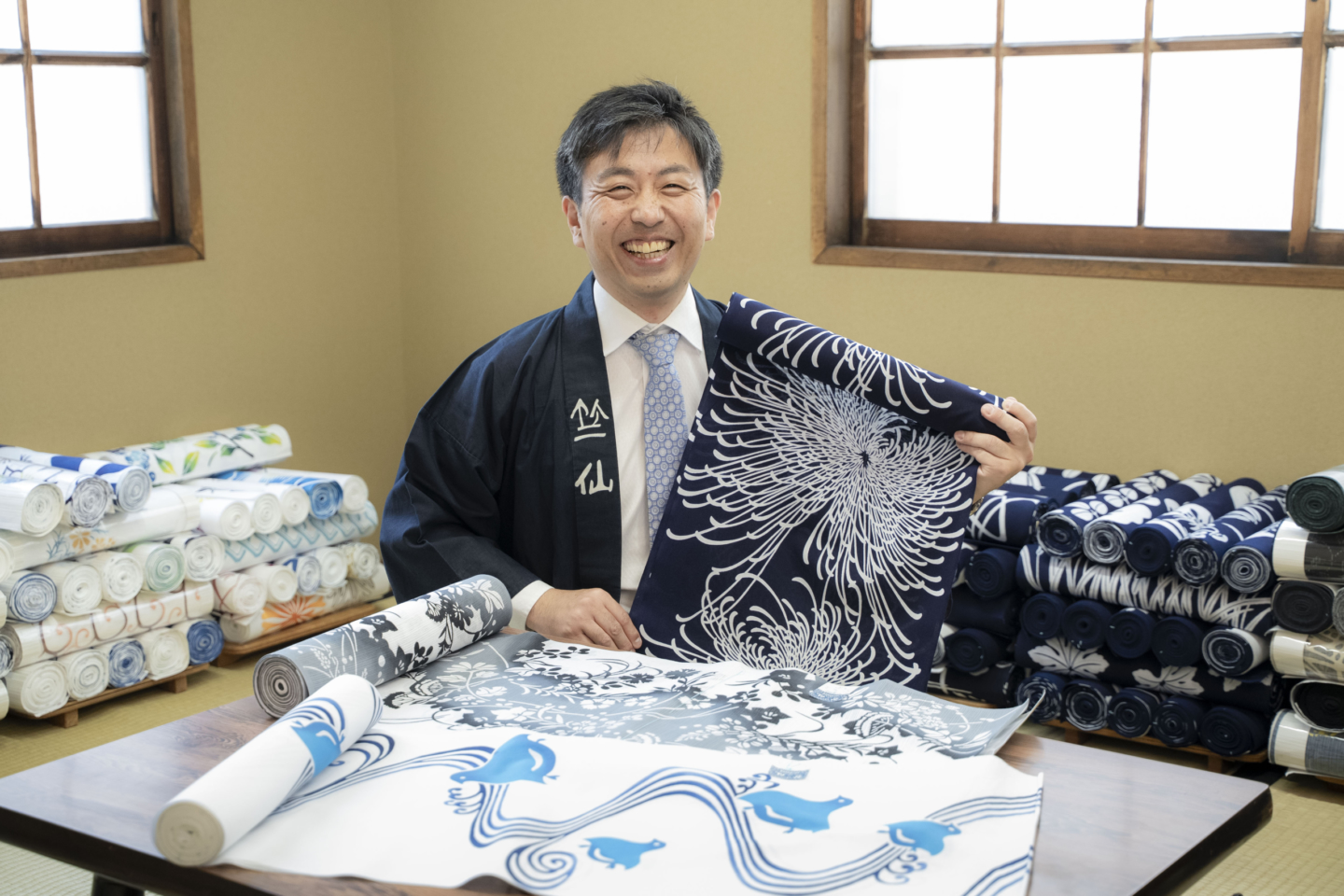
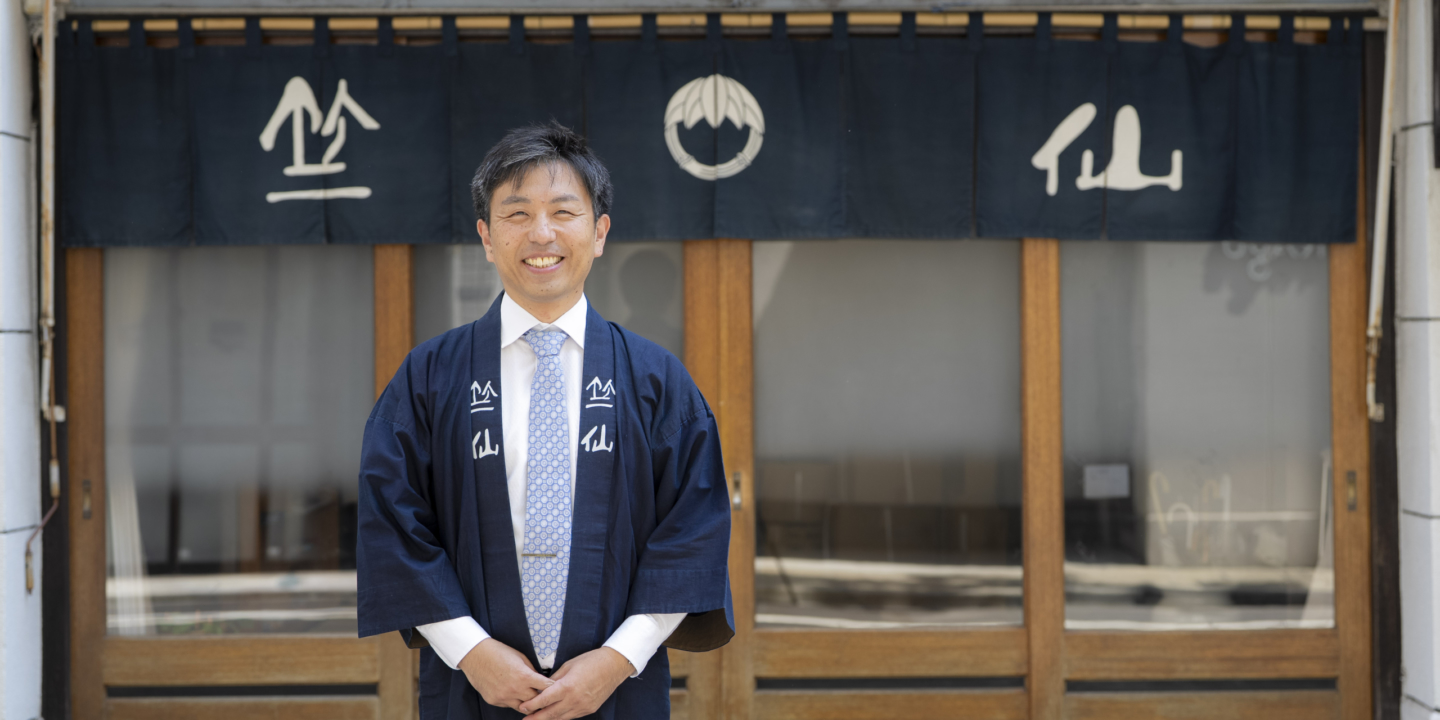
Chikusen President & CEO Shigeyuki Ogawa works with the company’s current head to preserve its traditions while developing new products.
The aesthetic of iki hitogara, handed down from Edo, has endured through relationships of trust between Chikusen and its artisans. At its core is the resolve expressed by Chikusen Kansei: to set a standard and uphold it. On that foundation, Chikusen continues to explore new forms of expression that suit the times. By valuing both what stays constant and what continues to evolve, Chikusen is carrying Edo’s aesthetic heritage into the future.