
![[The Next Generation] Dyeing Manager Hironori Kamei’s Vision at Murata Dyeing INDUSTRY (KOSOEN)](https://en.edotokyokirari.jp/wp-content/uploads/20260225111343/fd8e48672de084462cb7890a3740e291.jpg)
![[The Next Generation] Dyeing Manager Hironori Kamei’s Vision at Murata Dyeing INDUSTRY (KOSOEN)](https://en.edotokyokirari.jp/wp-content/uploads/20260225111358/172835b6562e8fd97980292f0ac506b9-750x750.jpg)
[The Next Generation] Dyeing Manager Hironori Kamei’s Vision at Murata Dyeing INDUSTRY (KOSOEN)
2026.03.05
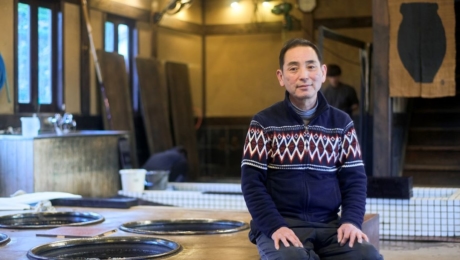
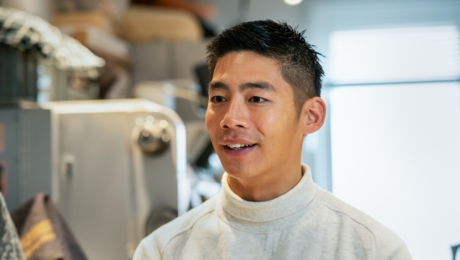
FASHIONAt Murata Dyeing INDUSTRY, Inc., which operates the indigo dyeing workshop KOSOEN in Ome City, Tokyo, Hironori Kamei—now in his ninth year with the company—leads a team of six dye artisans as dye manager. In May 2025, after a senior artisan left to establish an independent practice, he began overseeing everything from dye planning to staff management and process coordination. In addition to his expertise in indigo dyeing, he now faces the challenges unique to guiding and developing others. Refusing to settle for the status quo and continually striving for higher standards, Kamei spoke with us about the rewards of his work and the profound appeal of indigo dyeing.
Kamei first entered the world of indigo through his university studies of fermentation as part of food culture. While fermentation commonly calls to mind sake or miso, sukumo—the raw material used in indigo dyeing—is also produced through the slow work of microorganisms over time. Intrigued bysukumo, Kamei visited Tokushima Prefecture during his fourth year of university to train under indigo dyer Osamu Nii and experience the process ofsukumoproduction firsthand.
![[The Next Generation] Dyeing Manager Hironori Kamei’s Vision at Murata Dyeing INDUSTRY (KOSOEN)](https://en.edotokyokirari.jp/wp-content/uploads/20260225111608/1274b9e088b6927d002ed4b7eadcb3dd-1440x960.jpg)
After joining the company and witnessing indigo fermentation for the first time, Kamei recalls feeling that “the indigo was alive” as he watched clusters of foam known as ai no hana (“indigo flowers”) floating on the surface of the vat gradually gain luster and elasticity.
Approximately 40 years earlier, Noriyuki Murata, lead craftsman at KOSOEN, had trained under Nii as well. This unexpected connection led Kamei—despite having no prior dyeing experience—to join Murata Dyeing INDUSTRY immediately after graduating from university.
KOSOEN is one of the few workshops in Japan that continues to preserve the natural indigo lye-fermentation method that flourished during the Edo period. The workshop pursues beautiful indigo hues that combine clarity and depth—qualities that cannot be reproduced with chemical dyes.
![[The Next Generation] Dyeing Manager Hironori Kamei’s Vision at Murata Dyeing INDUSTRY (KOSOEN)](https://en.edotokyokirari.jp/wp-content/uploads/20260225111703/1cd7aa669c675dbad1fbb1cc878d8603-1440x960.jpg)
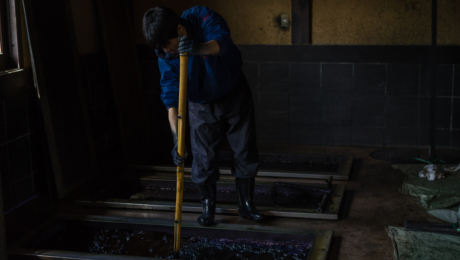
The indigo used at KOSOEN is 100 percent natural. Gentle on both the environment and the body, artisans immerse their bare hands in the dye liquid and judge the depth of color through the sensitivity of their fingertips.
After joining the company, Kamei believed that growth would not come from simply waiting to be taught. He actively sought guidance from senior artisans, asking questions and resolving uncertainties one by one. He soon began preparing indigo vats himself—fermentingsukumoto create dye liquid—and steadily built his skills, progressing from solid dyeing to gradient techniques. Today, as dye manager overseeing six artisans, he mentors junior staff while also managing personnel and schedules, marking a significant stage in his professional development.
“Each person here carries multiple responsibilities, and the fermentation condition differs in every vat,” he explains. “It’s essential that we understand one another’s workload and daily rhythm. When I first joined, there was a certain tension typical of the artisan world. Now, I try to foster an atmosphere where everyone can exchange opinions freely.”
Behind this mindset lies a difficult experience from his third year with the company. Entrusted with a gradient dyeing order from a brand, Kamei produced uneven results due to insufficient communication with a senior artisan. The experience left him acutely aware of his own inexperience. Determined not to repeat the mistake, he resolved to provide attentive oversight and guidance so that junior colleagues would not encounter the same obstacle. Now, as manager, he carefully considers each artisan’s strengths and assigns roles accordingly, improving the workshop’s overall precision.
![[The Next Generation] Dyeing Manager Hironori Kamei’s Vision at Murata Dyeing INDUSTRY (KOSOEN)](https://en.edotokyokirari.jp/wp-content/uploads/20260225111758/4b81a4795b2ec83e71064b4db17ae879-1440x960.jpg)
Of the company’s 13 current employees, 11 are in their 20s and 30s. Kamei actively engages with junior staff, carefully answering their questions about dyeing techniques and offering advice.
Toshiyuki Murata, the fourth-generation president of Murata Dyeing INDUSTRY, places great trust in Kamei. In the past, artisans who gained sufficient experience often sought independence, leaving the organization without a strong middle layer. Moreover, if independent artisans were forced to close their businesses, the traditional techniques they had cultivated could be lost. Concerned about this, President Murata resolved to safeguard the craft within the organization. He improved working conditions so artisans could build long-term careers and created an environment where they could pursue new challenges without becoming independent. Influenced by this philosophy, Kamei’s own outlook gradually changed.
“When I first joined, I also considered becoming independent. Now, my primary goal is to share the beauty of KOSOEN’s indigo blue with as many people as possible. I refine workflows to improve efficiency, and I regularly wash the vat lids while experimenting, little by little, with practices I believe benefit the microorganisms in order to stabilize fermentation.”
![[The Next Generation] Dyeing Manager Hironori Kamei’s Vision at Murata Dyeing INDUSTRY (KOSOEN)](https://en.edotokyokirari.jp/wp-content/uploads/20260225111850/dcabcdc6e6750eede79c3705ee77e8a0-1440x960.jpg)
In addition to proposing original apparel and accessories under KOSOEN, the company launched ŌME, a fashion brand featuring indigo and botanical dyeing, in 2024, focusing on new developments aimed at younger generations.
Two years ago, Kamei was selected as a founding member of a botanical dyeing line and faced the challenges of techniques different from indigo dyeing. However, he says that experience became a valuable opportunity to rediscover the enjoyment and depth of indigo dyeing.
“What we protect is authentic indigo dyeing—techniques that have continued since the Edo period, using natural materials. It is a source of pride to inherit the wisdom and experience built by our predecessors and to create this beautiful color. That pride is what gives meaning to my work today.”
At Murata Dyeing INDUSTRY, young dye artisans like Kamei now play a central role, passing inherited techniques to the next generation while continuing to explore new expressions and possibilities rooted in tradition, such as applying indigo dye to materials like wood and stone.
![[The Next Generation] Dyeing Manager Hironori Kamei’s Vision at Murata Dyeing INDUSTRY (KOSOEN)](https://en.edotokyokirari.jp/wp-content/uploads/20260225111940/36154aa0e781d518467a79580e1536f0-1440x960.jpg)
“For now, I’m simply focused on giving my full effort to the work in front of me,” says Kamei. Following the example of the lead craftsman, who still says “every day is a learning experience” even after 40 years of dyeing, he continues to devote himself to indigo each day.
The Next Generation is a series spotlighting the young artisans and staff helping pass down traditional skills and know-how that have been nurtured in Tokyo across generations. The series explores what inspired them to choose this path, what their work entails, and what they envision for the future.