

Passing On Edo’s Dashi Culture and Embracing New Challenges: The 13th-Generation Head of Ninben
2026.08.10
FOODFounded in 1699, Ninben has proudly displayed its noren in Nihonbashi as a katsuobushi (dried skipjack tuna) specialty shop for more than 300 years. Over the centuries, it has preserved the distinctive flavor of dashi (Japanese soup stock) drawn from katsuobushi, a cornerstone of the culinary culture in old Edo and today’s Tokyo.
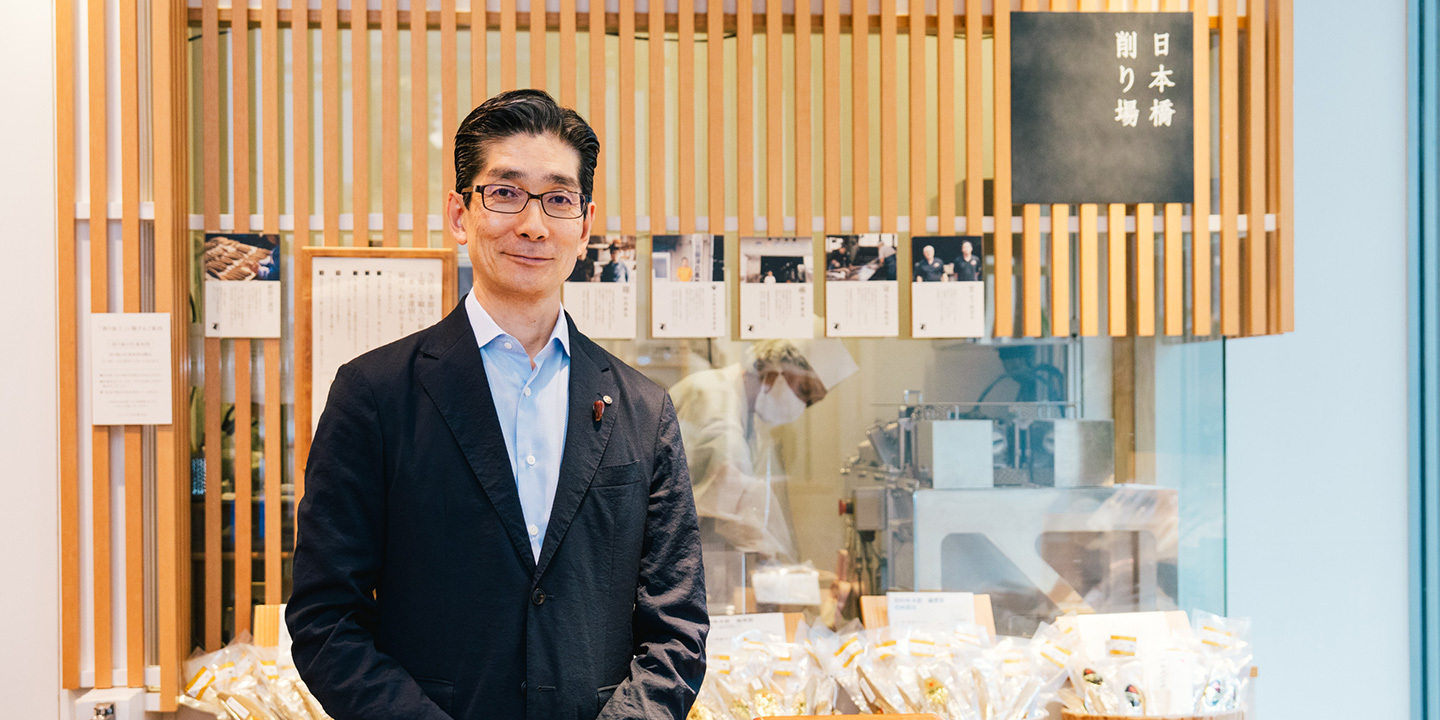
Ninben is currently led by President Ihee Takatsu, the shop’s 13th-generation head. From an early age, he developed a deep connection with dashi through visits to katsuobushi producers across Japan and meals prepared with katsuobushi dashi. Six years since assuming the hereditary name, he continues the legacy of his predecessors by passing on dashi culture in ways that resonate today while also pursuing new initiatives for the future.
Ninben Carries Forward the Flavor of Honkarebushi
Ninben’s honkarebushi is the highest grade of katsuobushi, matured for nearly half a year through at least four cycles of mold cultivation and sun‑drying. This painstaking process is essential because dashi made from fully matured katsuobushi has a distinctive taste long favored throughout the Kanto region.
“Since the Edo period, there has been a culinary tradition centered on dashi drawn from honkarebushi,” says President Takatsu. “We believe our mission is to pass on that flavor and culture to future generations.”
In essence, Ninben’s 300-year history is the saga of safeguarding honkarebushi and carrying forward its dashi heritage.
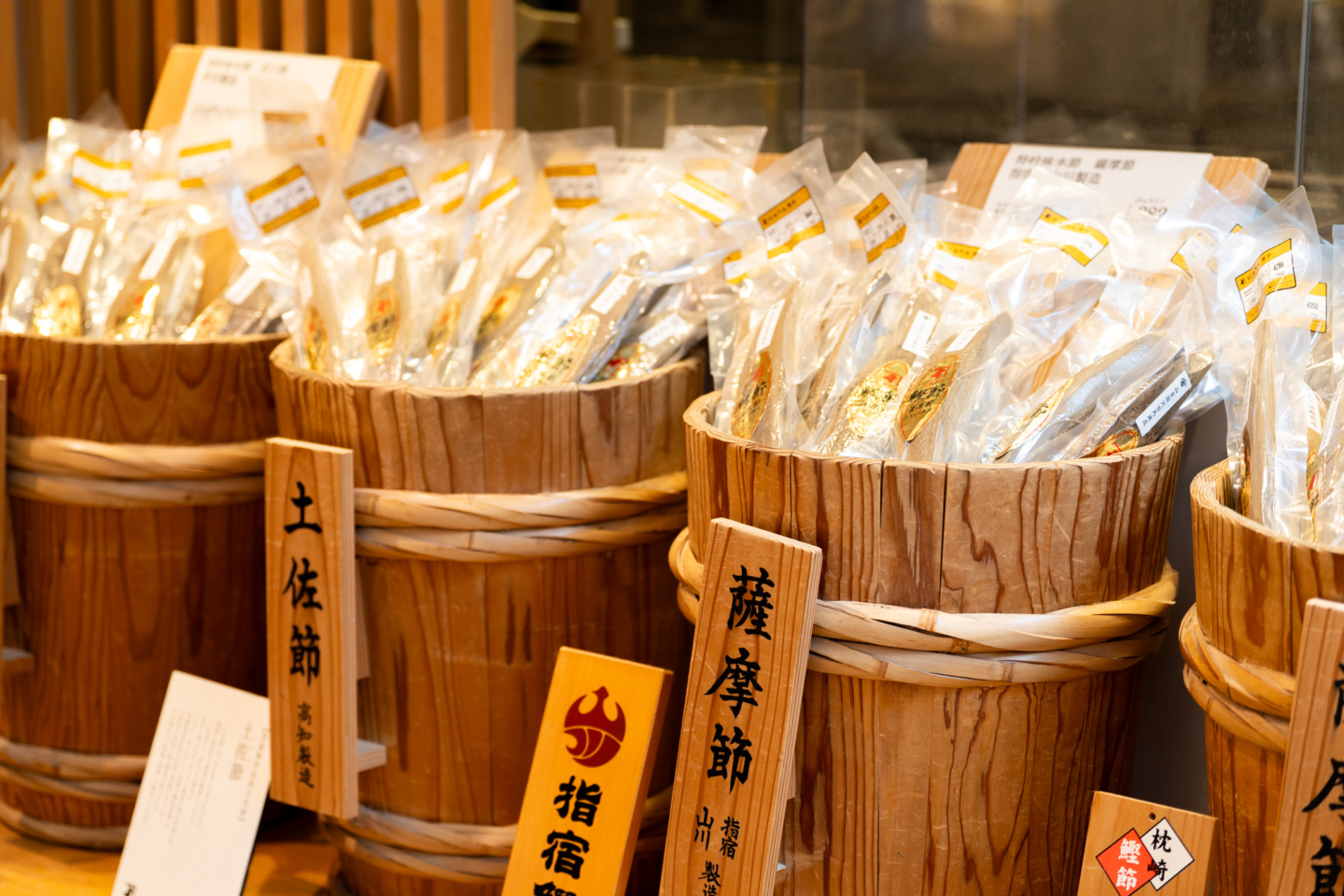
Honkarebushi displayed by place of origin at Ninben’s Nihonbashi Main Store
Cultivating The Artisan Eye Behind Ninben’s Honkarebushi
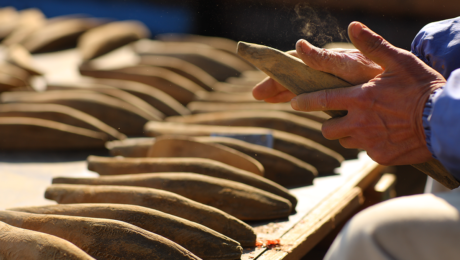
To preserve this treasured culinary tradition from the Edo period, Ninben closely collaborates with katsuobushi producers nationwide to consistently produce premium-quality honkarebushi. This achievement requires rigorous scrutiny of the katsuobushi at every stage of production. Most important is final selection, when master craftsmen with an exceptionally keen eye inspect each and every piece—a crucial process said to underpin the quality of Ninben’s honkarebushi.
“Katsuobushi quality varies significantly by fat content, season, fishing grounds, filleting method, and many other factors,” Takatsu tells us. “Therefore, a discerning eye is essential from the procurement stage onward. But acquiring such expertise requires vast hands-on experience. At our partner factories, trainees spend several years learning from senior artisans what to look for in katsuobushi and how to judge its quality. This is how we nurture the next generation of master artisans.”
“Currently, only three expert graders are entrusted with the final selection of our honkarebushi,” he adds. “Drawing on years of experience and finely honed intuition, they are the guardians of our company’s quality.”
Employees learn by listening and judging with their own eyes. Since various points require evaluation at every stage, mastering the craft demands years of daily practice. Even when craftsmen change, the quality delivered to customers must remain the same. Therefore, cultivating a discerning eye is one of Ninben’s core commitments.
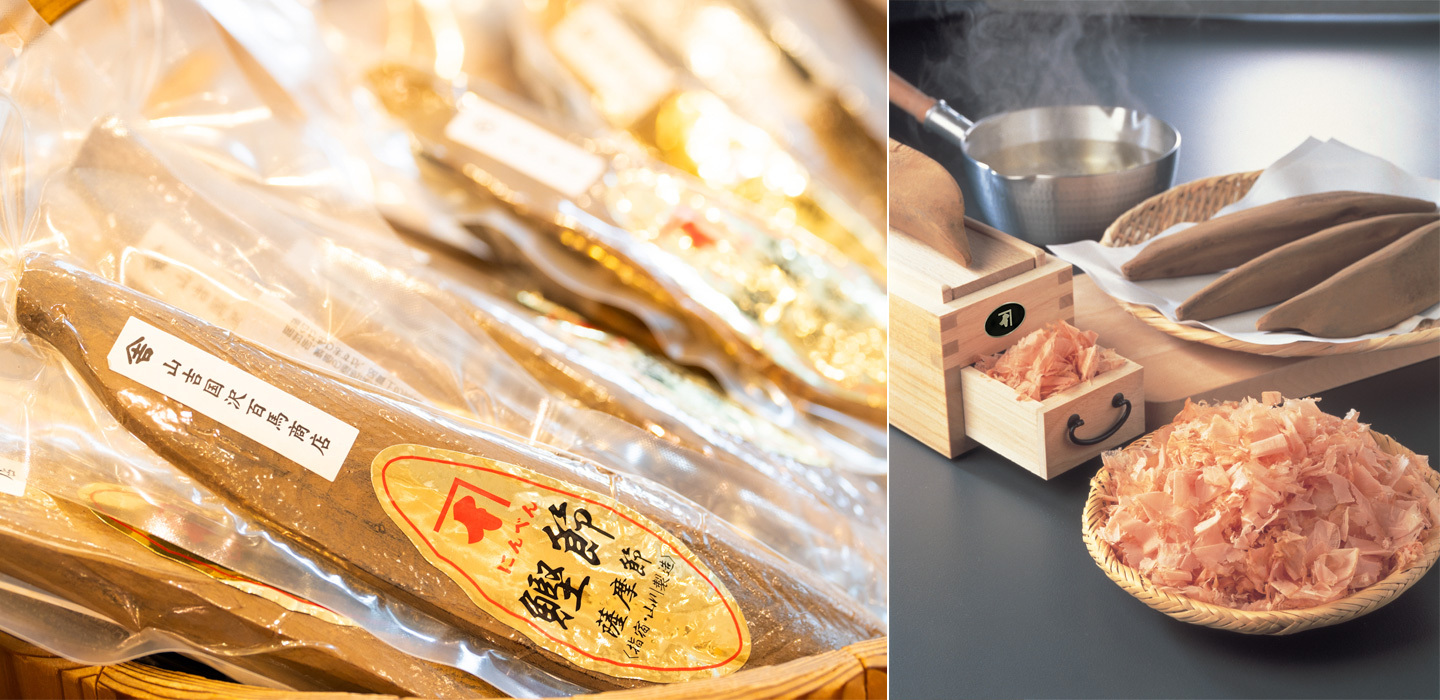
Honkarebushi selected by skilled craftsmen based on meat quality, shape, mold color, dryness, and other criteria
Dashi for the Modern Era, Advanced by the 13th‑Generation Head
Since the founding of Ninben, every generation of leadership has anticipated the times and pursued trailblazing initiatives. These included katsuobushi price displays, cash-only transactions, silver gift certificates, Fresh Pack film that preserved the flavor of fresh shavings, and Tsuyu no Moto liquid seasoning for easy home enjoyment of katsuobushi dashi. Inheriting this pioneering spirit, President Takatsu established the Nihonbashi Dashi Bar—a casual spot for experiencing dashi—beside the flagship store when it relocated to the Coredo Muromachi complex in 2010.
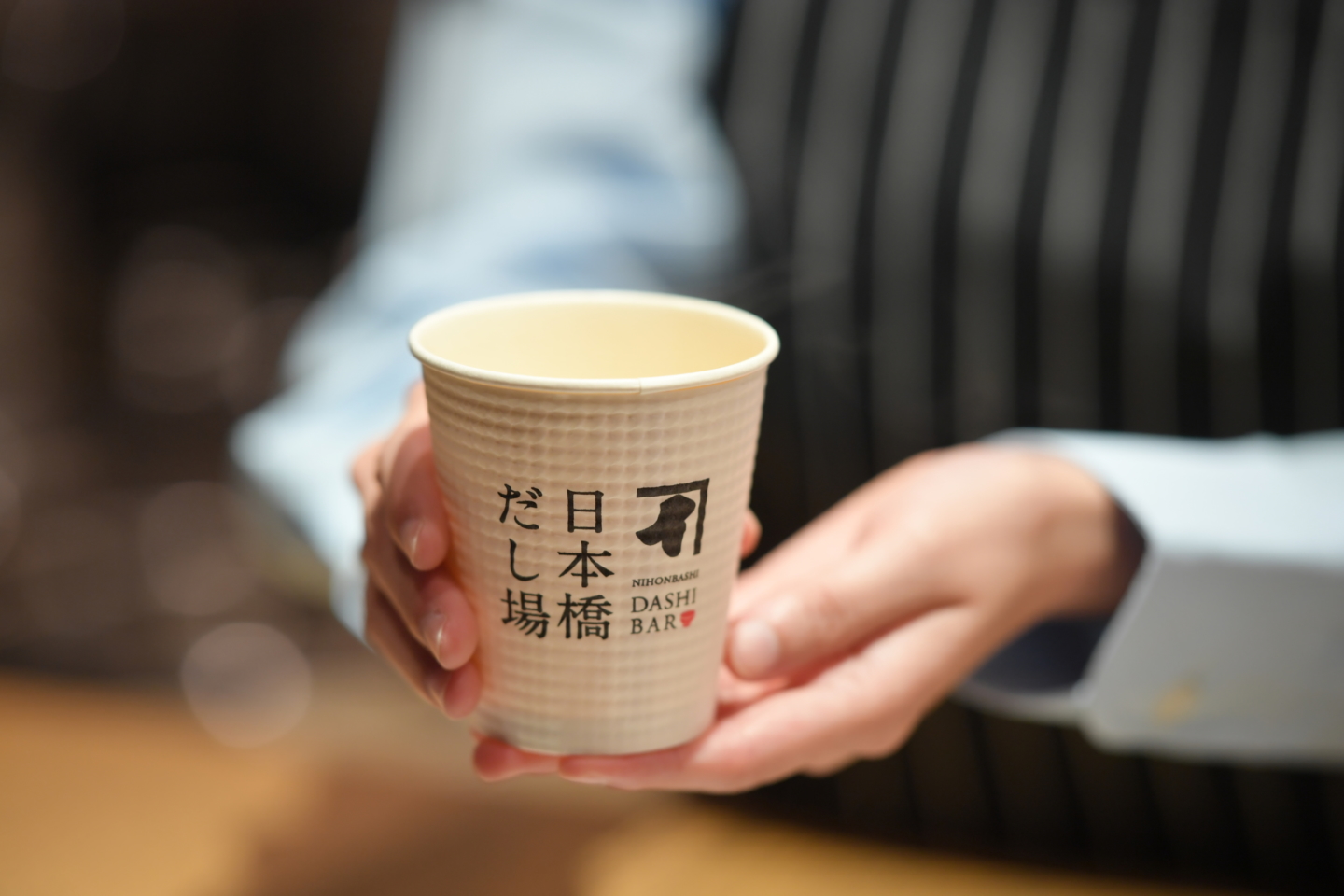
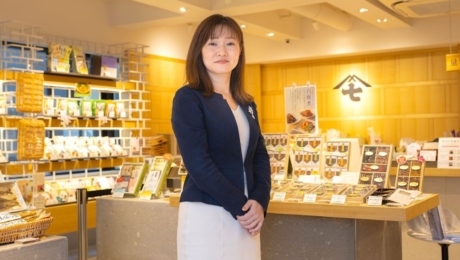
Nihonbashi Dashi Bar, adjacent to the main store, offers simple katsuobushi dashi as well as tomato- and cream-flavored variations (as of July 2026).
“We relocated our main store to its current location when Nihonbashi Muromachi East District was redeveloped,” Takatsu recalls. “At that time, I had decided to pursue various initiatives. Our former main store primarily offered seasonal gifts, such as Ochugen and Oseibo, and ceremonial gifts for weddings and other occasions. For the new store, we wanted to create a place where people could discover more about katsuobushi and dashi in everyday cooking.”
The relocated main store attracted far more visitors than expected, and the Nihonbashi Dashi Bar sold over 1,000 cups of katsuobushi dashi every day following its opening. According to Takatsu, many customers found themselves rediscovering the deliciousness of dashi and were deeply moved by it, often remarking that it was ‘truly comforting.’ For younger visitors, it offered an entirely new culinary experience, while for older generations, it evoked fond memories of dashi and the rich traditions of Japanese cuisine.
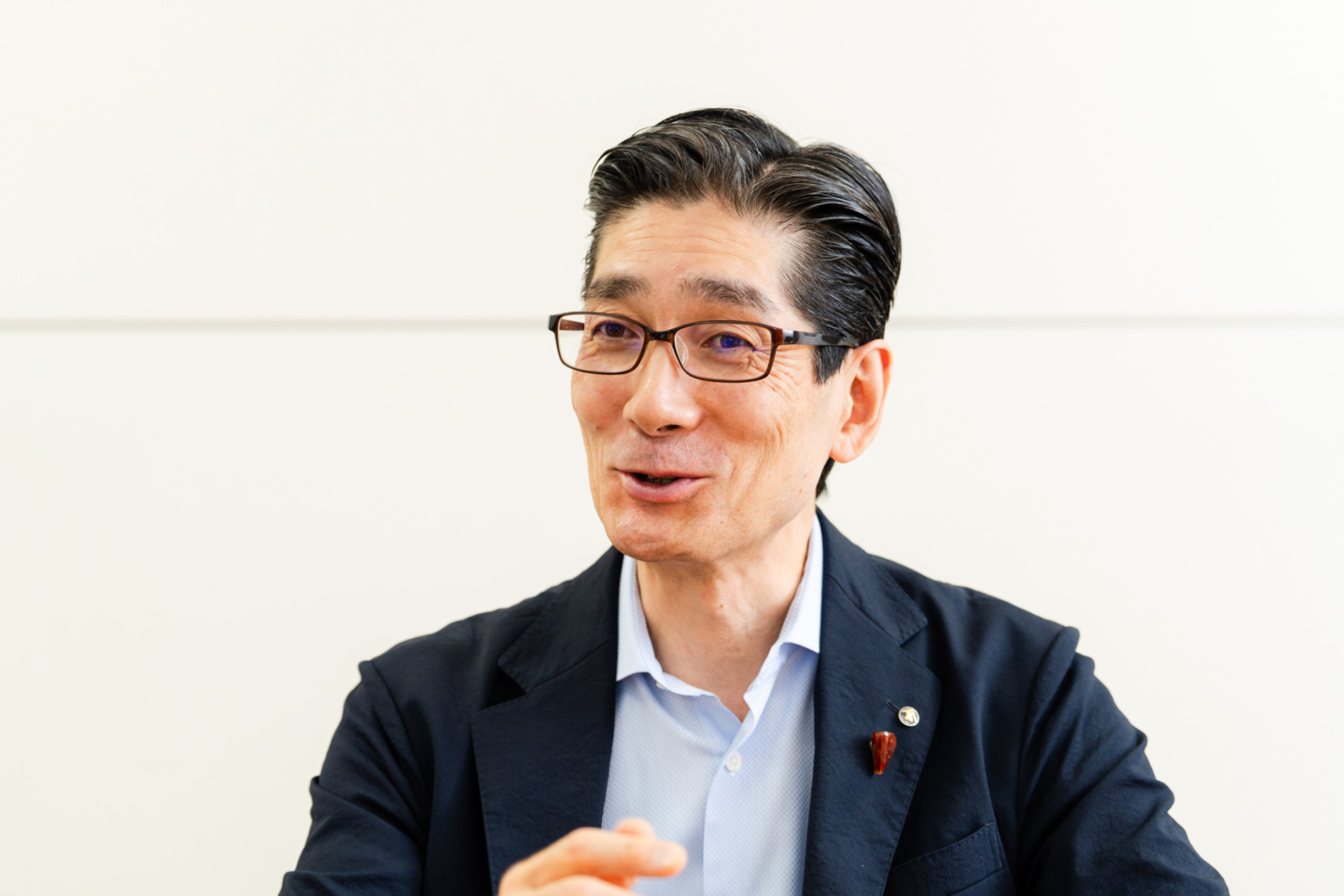
Ihee Takatsu, President and 13th-Generation Head of Ninben
Ninben is also endeavoring to share the appeal of dashi overseas. Exports have grown steadily, with transactions nearly tripling over the last ten years. However, Takatsu believes international awareness and demand for katsuobushi and dashi are still developing.
“We continue to expand our reach with local distributors and restaurants. Little by little, overseas customers are also discovering our katsuobushi and dashi products,” Takatsu says. “But katsuobushi and dashi haven’t yet become part of everyday home cooking abroad, and we are exploring the possibility of local production.”
In an era of countless food choices, Ninben is exploring ways to bring katsuobushi and dashi into people’s everyday lives. In Japan, the company is encouraging their use in everyday cooking by recruiting ‟Dashi Ambassadors” on social media and publishing recipes. Overseas, the focus is on building awareness of dashi products themselves.
“Both in Japan and abroad,” President Takatsu continues, “we want people to become more familiar with katsuobushi and dashi. At the heart of this desire is our commitment to authenticity. We continue to operate in Nihonbashi, our founding home, because it has long been a source of genuine craftsmanship, producing authentic products and passing them on to satisfied customers. We hope to continue sharing the true taste of Edo and Tokyo through honkarebushi for generations to come.”
The challenging pursuit of the 13th-generation head continues.
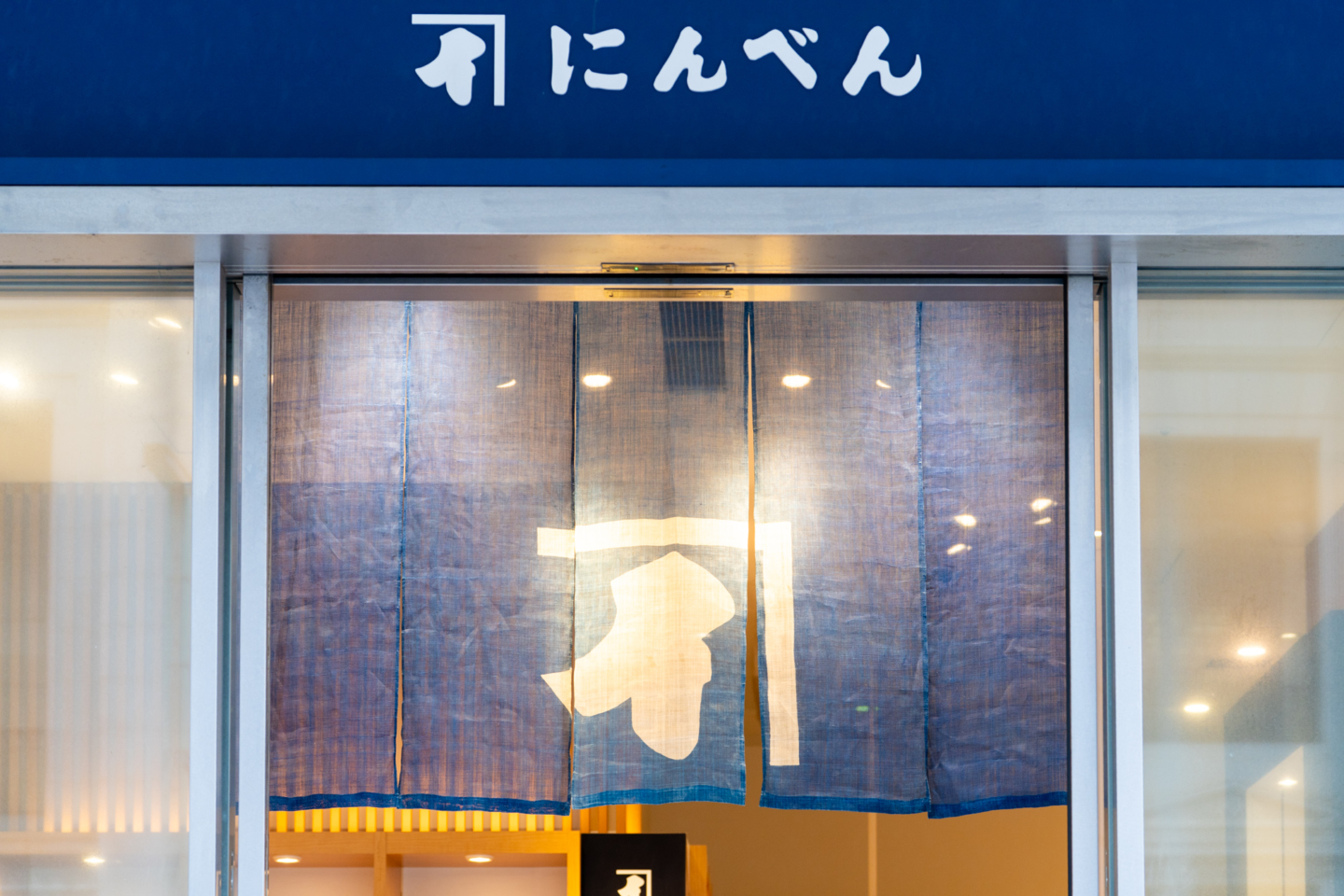
The trademarked noren emblem established by first-generation head Ihee Takatsu conveys Ninben’s Edo heritage.