

A Granddaughter’s Mission to Share the Beauty of Kinkarakami Revived by Her Late Grandfather
2026.09.03
LIFEKinkarakami is the decorative craft of applying metallic foil to washi (Japanese paper) and embossing it with carved woodblocks to create richly textured, raised patterns. Originating in the late Edo and Meiji eras (late 19th century), the craft had nearly died out by the early Showa period (1926–1945). But the 1983 restoration of wallpaper at NYK Line’s former Otaru Branch—now an Important Cultural Property—inspired artisan Takashi Ueda to revive the craft as Kinkarakami. He passed on the techniques to his granddaughter, Mai Ebata, who is carrying on the tradition today. While contributing to the restoration of Important Cultural Properties, Ebata is also dedicated to exploring new forms of expression and conducting research into the craft. Her efforts to share the beauty of Kinkarakami with a wider audience are only just beginning.
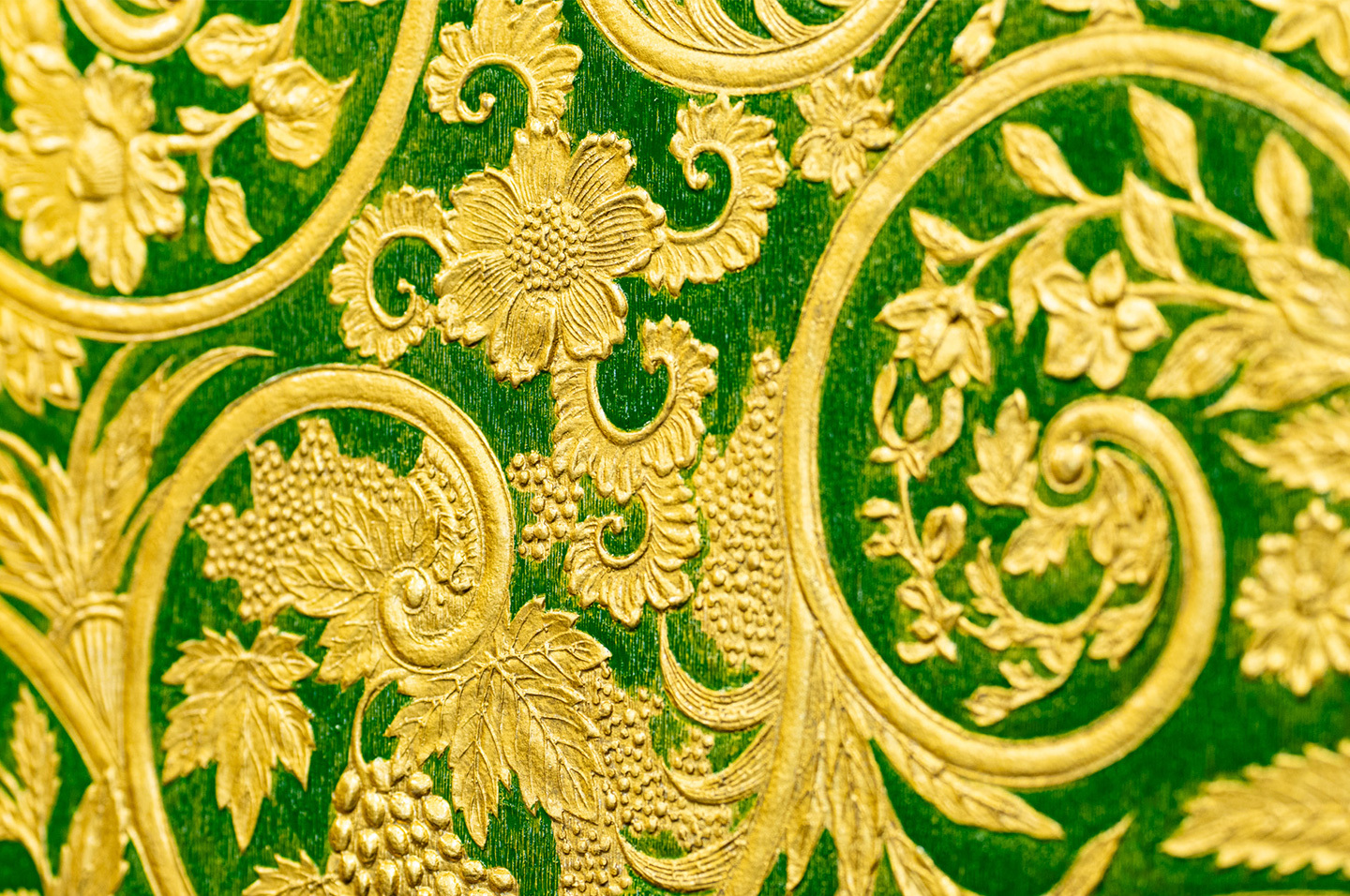
Exquisite beauty that draws you in for a closer look.
Captivated by Her Grandfather’s Work, She Carries on the Craft
Ebata first became interested in Kinkarakami when she was in elementary school. She had always known the works displayed in her home were made by her grandfather, but it was only after she began visiting his exhibitions that her appreciation deepened.
“At the exhibitions, I learned about the history of Kinkarakami and how my grandfather revived the craft, which had once been lost,” she recalls. “When I looked at his works in our home with that new understanding, I was deeply moved by how washi could be transformed into something so delicate and beautiful. That experience inspired me to pursue this path, and it continues to motivate me to this day.”
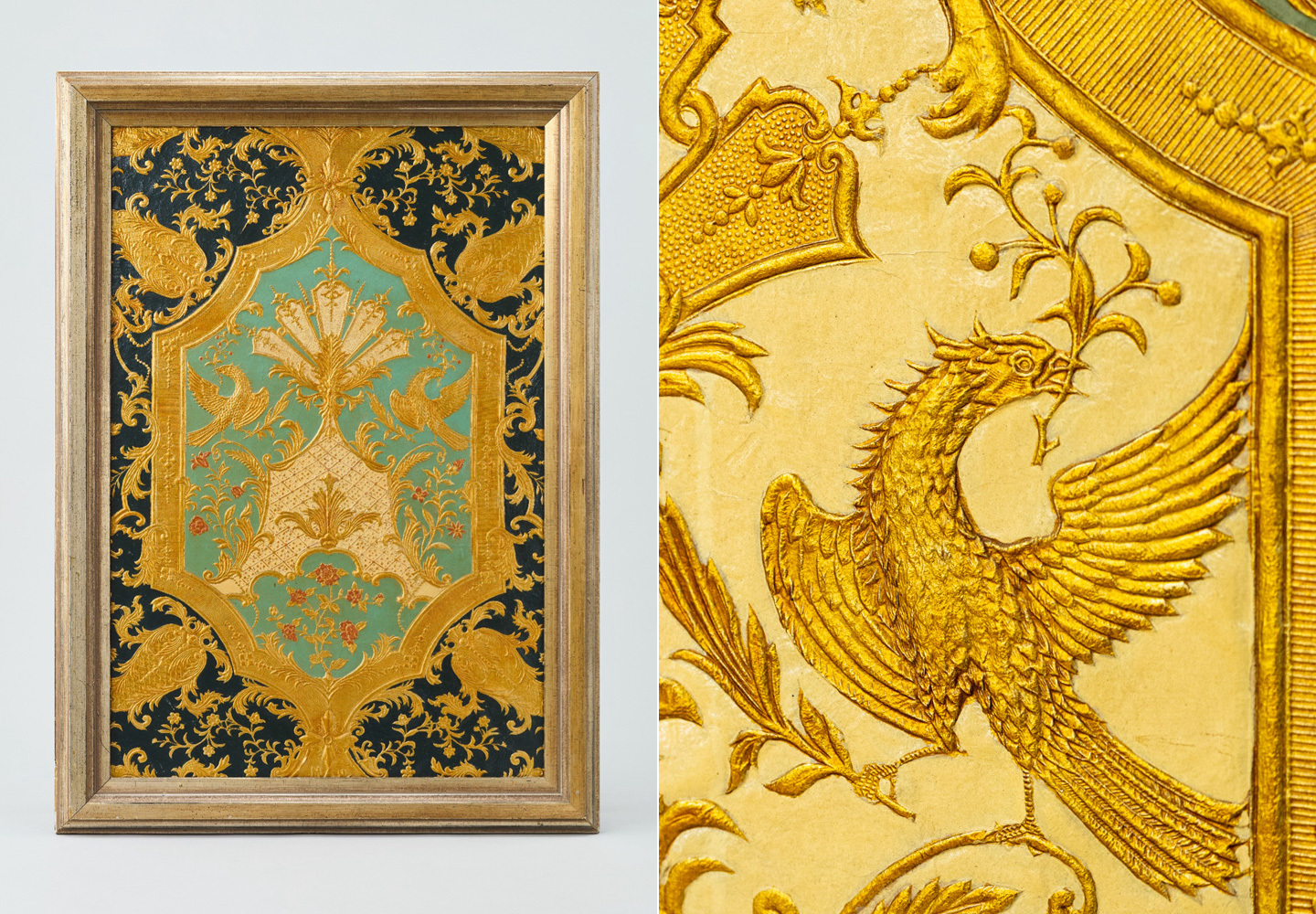
Works by Ueda, showcasing his exceptional craftsmanship in every detail from birds’ feathers to flower petals.
When Ebata declared her intention to follow in her grandfather’s footsteps, both Ueda and her family were initially concerned. They had hoped she would choose a more stable career. However, they came to understand and support her decision after many conversations. Upon graduating from university, she joined the Kinkarakami Institute that Ueda had founded. Her apprenticeship began by assisting him directly in his work. She also accompanied him on restoration projects for Important Cultural Properties to gain hands-on experience in the field. Rather than teaching through formal instruction, Ueda guided her by offering advice and pointing out areas for improvement as they worked side by side.
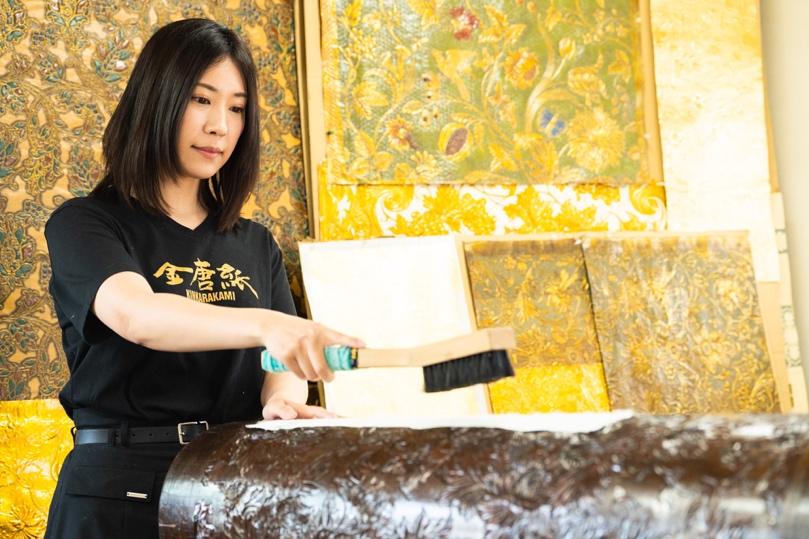
Mai Ebata at work. The process of repeatedly tapping dampened washi with a brush to emboss the patterns is more demanding than one might imagine.
“By the time I started training, my grandfather was already old. So I took on physically demanding tasks like repeated tapping from the start,” Ebata explains. “He would watch me work and offer pointers for improvement. Although I rarely saw him perform physically demanding work himself, he was always there beside me, keeping a close eye on my progress.”
Ebata had devoted herself to mastering the craft for over a decade when Ueda passed away in 2025.
Beyond Restoration: Introducing Kinkarakami to the Wider World
After Ueda passed away, Ebata took over the reins at Kinkarakami Institute. She says it has begun to feel like awareness of Kinkarakami is gradually spreading, particularly through the Important Cultural Properties she has helped restore.
“Many visitors to these cultural properties assume Kinkarakami was introduced from the West,” she says. “When we explain its history as a Japanese craft and describe how it is created using washi, they are often amazed. Many even become interested in trying to make it themselves. In addition to workshops, we offer special courses where participants can learn the entire production process from start to finish. Both have been very well received.”
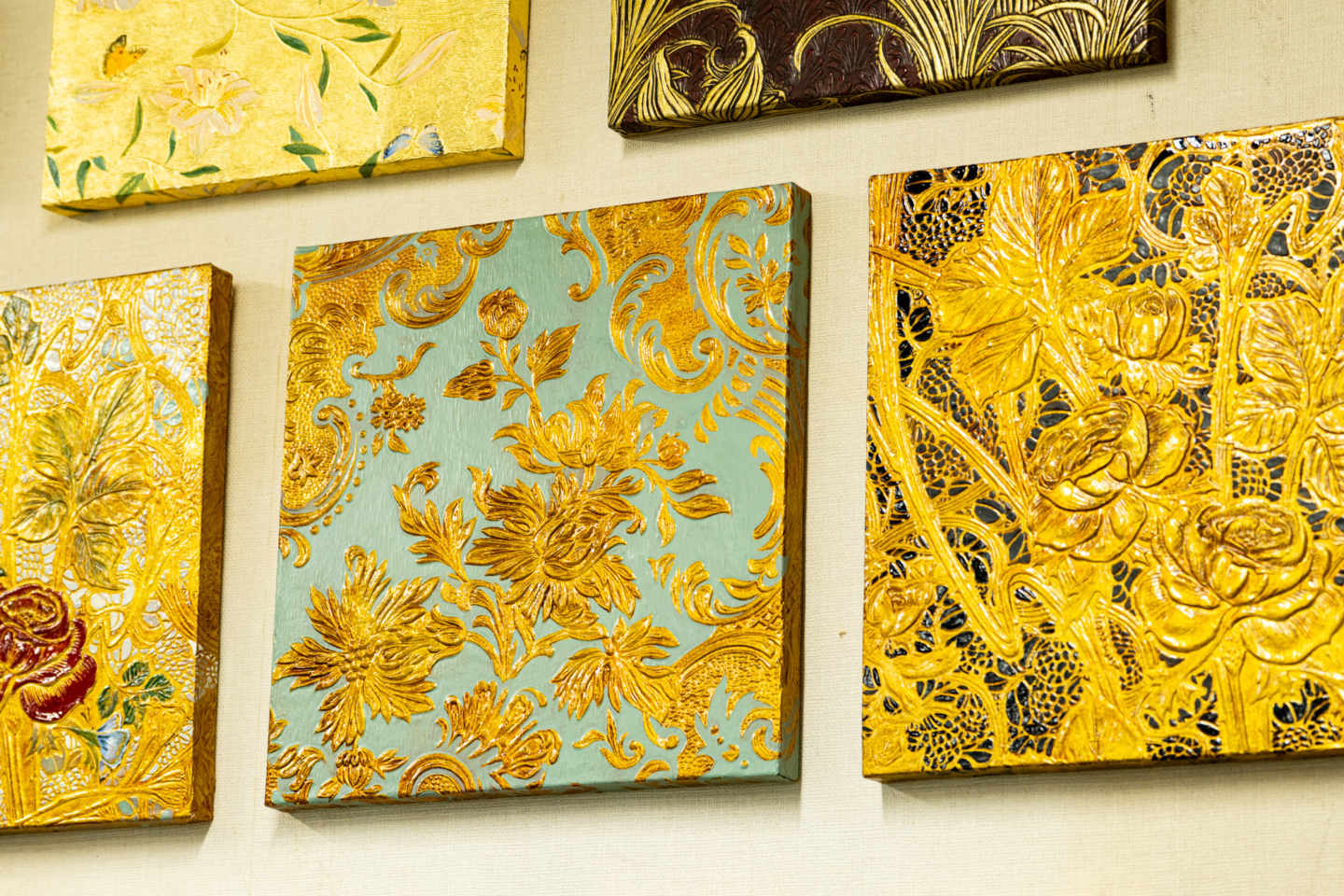
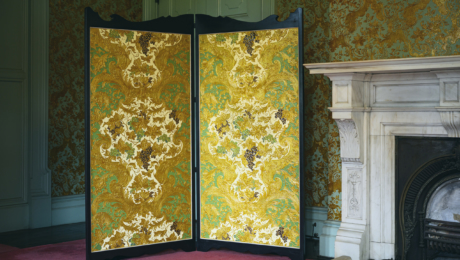
Panels decorated with Kinkarakami provide a striking accent for any interior.
Ebata is also committed to making Kinkarakami a more familiar part of everyday life. She offers Kinkarakami panels that accent any interior, and smaller items such as business card cases and wallets. She has also forged connections with washi producers and interior design professionals across Japan, as well as traditional artisans she met through the Edo Tokyo Kirari Project. These relationships are giving rise to new collaborative projects.
“Being able to connect with so many traditional artisans has been a tremendous source of encouragement,” she says. “I look forward to sharing ideas and collaborating in ways that bring out the best in our crafts.”
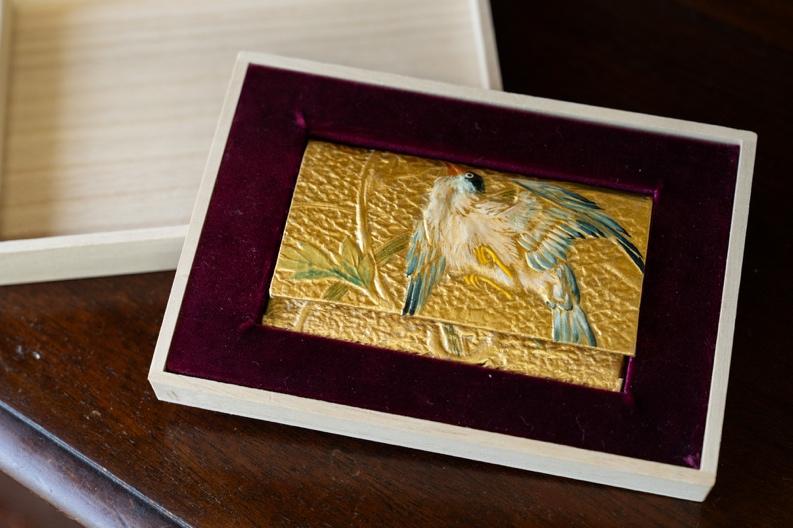
A Kinkarakami business card case with a dynamic bird motif that captures the energy of a bird taking flight.
Exploring New Expressions and Preserving the Craft for Future Generations
Ebata says she is determined to preserve the techniques and spirit she inherited from her grandfather. She believes that mechanizing or streamlining the process would compromise quality, and that preserving the traditional methods is essential to passing the craft on to future generations. At the same time, she continues to explore new creative possibilities and lay the groundwork for introducing Kinkarakami to artists in Japan and abroad.
“There are so many different kinds of metallic foils, washi, and pigments, and I want to experiment with as many of them as possible,” she says. “Collaborating with artists means creating designs unlike anything we’ve done before — so we’ll need to make new woodblocks. I currently use a cylindrical woodblock roller, or Hangi Roll, that was made during the Meiji era and is now preserved at the Paper Museum. Because of its age, there is always a risk of damage. Since it’s such a historically valuable tool, I have to be very careful about continuing to use it to produce traditional patterns. If we want to keep using the Hangi Roll for years to come, we need to balance use with preservation.”
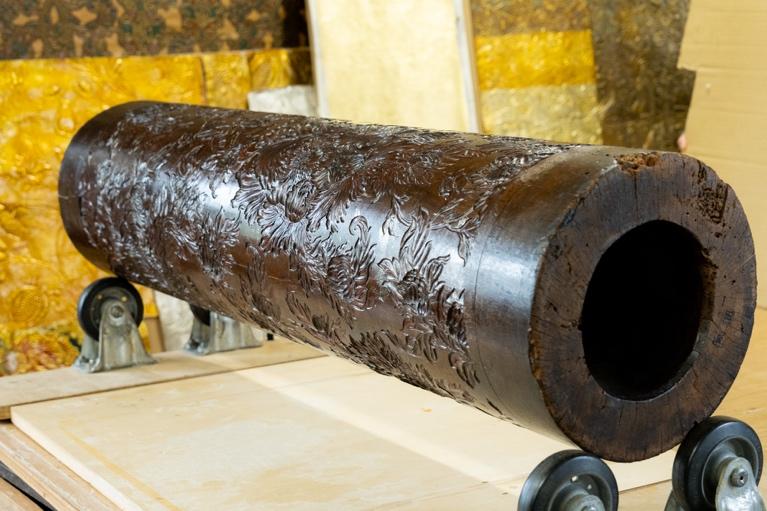
A Hangi Roll made during the Meiji era. Intricate patterns are carved into its outer surface.
With an eye toward preserving the craft for future generations, Ebata is also actively involved in research conducted in collaboration with museum curators. While investigating inquiries from owners of historic houses, she has even discovered previously undocumented examples of Kinkarakami. She hopes to continue this research and uncover more of the craft’s hidden history in the years ahead.
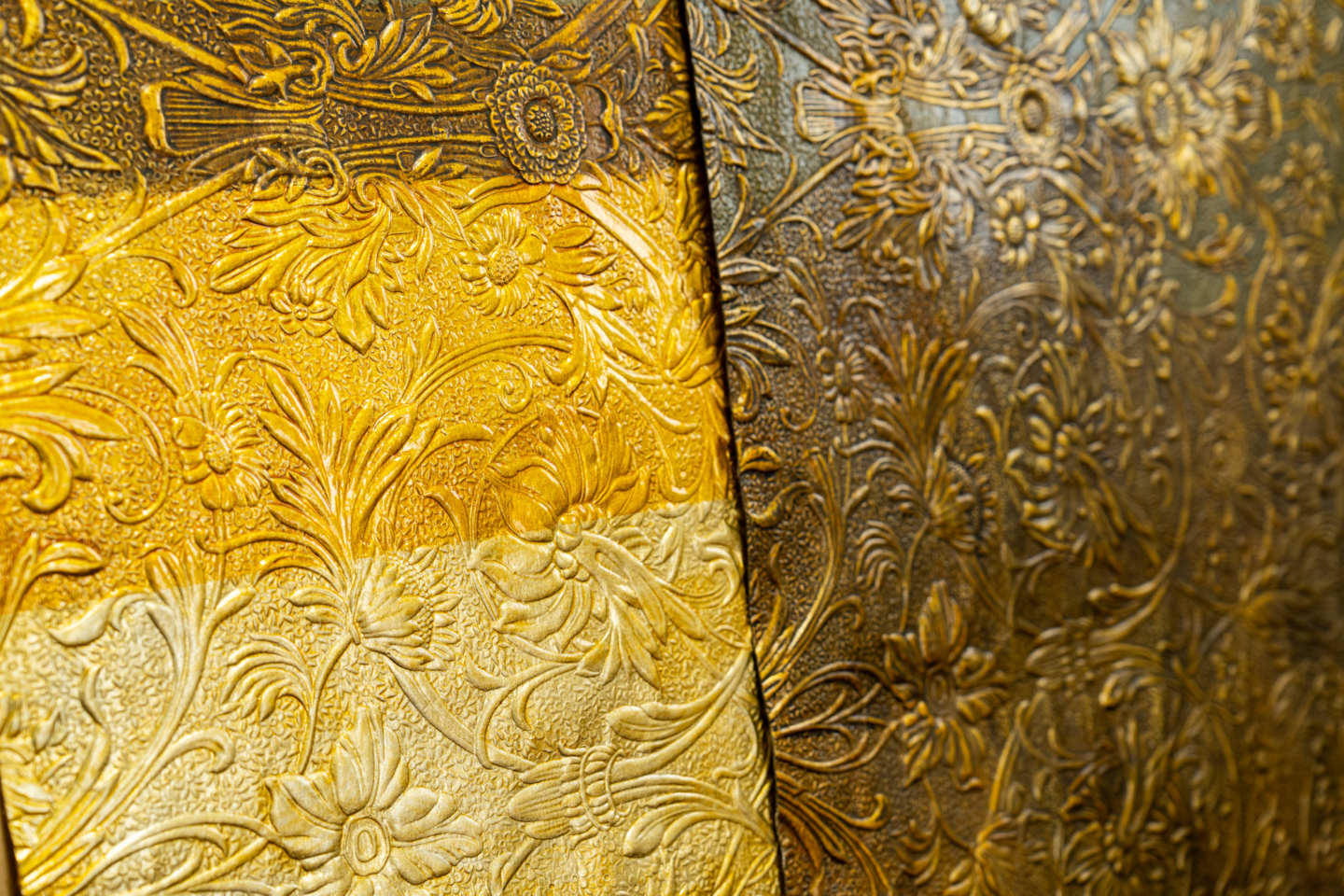
Embossed washi coated with varnish to protect the surface and enhance its luster.
“During the Meiji era, Kinkarakami was exported overseas and played a role in introducing Japan to the world,” she notes. “In fact, it is better known abroad than in Japan, and antique pieces are sometimes passed down without people realizing they were made in Japan. That’s why I think it would be fascinating to remind the world that the Kinkarakami revived by my grandfather is a truly Japanese craft.
The idea of sharing the beauty of Japanese craftsmanship with the world aligns perfectly with the vision of the Edo Tokyo Kirari Project. One day, I hope to share the beauty of this craft with the world from Tokyo, and I’m now laying the groundwork for that. As I preserve this craft as part of Japan’s cultural heritage, I want to value both protecting tradition and exploring new forms of expression, while continuing to discover the many possibilities of Kinkarakami.”
Listening to Ebata speak about the beauty of Kinkarakami and her vision for its future, one cannot help but sense her deep passion for the craft. Once a flourishing tradition that later faded into obscurity, Kinkarakami was revived by Takashi Ueda. In the Reiwa era (2019-present), that legacy has now been passed on to Ebata, who is opening the door to new possibilities for the craft.
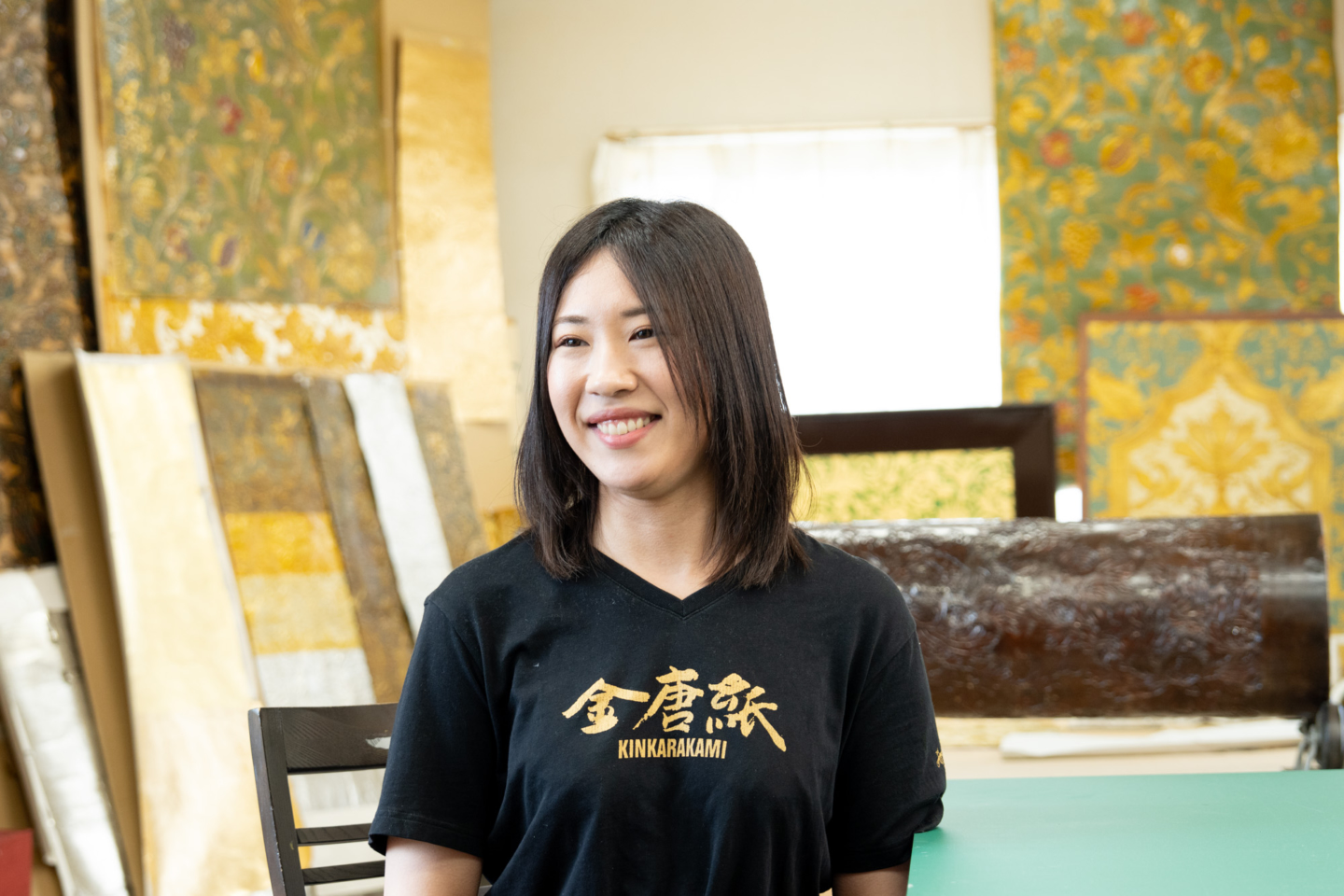
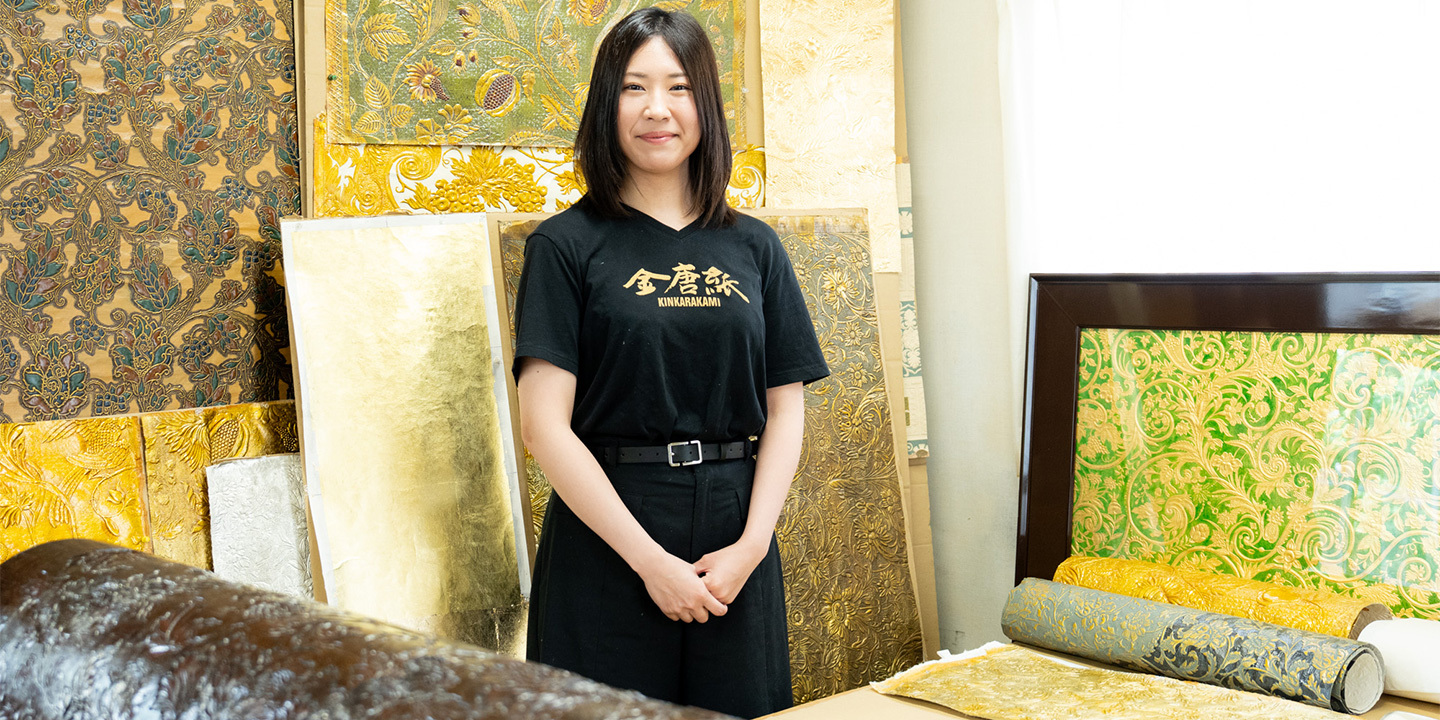
Ebata shares the beauty of Kinkarakami with a warm smile.
RELATED interview
![[The Next Generation] The Young Designer Carrying Forward Seiko’s Craft Excellence and Pride](https://en.edotokyokirari.jp/wp-content/uploads/20260318094902/4efb8d80c5c801562ebfd7667d332e13-460x260.jpg)
[The Next Generation] The Young Designer Carrying Forward Seiko’s Craft Excellence an...
LIFE![[The Next Generation] Komiya Shoten’s Brand Manager on Unlocking the Charm and Potential of the Tokyo Umbrella](https://en.edotokyokirari.jp/wp-content/uploads/20251107111521/e07a2a02630087752dd2ba8be280a61c-460x260.jpg)
[The Next Generation] Komiya Shoten’s Brand Manager on Unlocking the Charm and Potent...
LIFE![[The Next Generation] New Horizons for EdoKimekomiDolls: The Passion and Precision of Matsuzaki Doll’s Youngest Artisan](https://en.edotokyokirari.jp/wp-content/uploads/20250910103110/f102b4943a76a828bbc619d7a3edea2b-460x260.png)
[The Next Generation] New Horizons for EdoKimekomiDolls: The Passion and Preci...
LIFEVIEW MORE