
Yamamoto Noriten’s New Challenges in Expanding the Appeal of Nori
2026.03.11
FOODFounded in 1849 in Nihonbashi Muromachi 1-chome, Yamamoto Noriten created Japan’s firstajitsukenori (seasoned nori) in 1869, when Emperor Meiji returned to Kyoto and a suitable gift was sought. This marked the beginning of the company’s appointment as a purveyor to the Imperial Household, establishing its reputation as one of Tokyo’s leading nori specialists. Its flagship product, Ume no Hana, gained widespread popularity during the Showa era, supported by the strong demand for midyear and year-end gift-giving.

Takahiro Yamamoto, who became president and CEO in 2021. Drawing on his experience in overseas operations, he has introduced a series of new initiatives. He is pictured holding a booklet created through the Edo Tokyo Kirari Project to convey the appeal of nori.
Since joining the Edo Tokyo Kirari Project in 2018, Yamamoto Noriten has continued working to refine its brand image. Through initiatives such as producing overseas leaflets incorporating the perspectives of experts and specialists, efforts to rebuild and unify the brand have remained ongoing. “Even before I assumed the company presidency, we had been carefully considering how to unify the brand image,” Yamamoto explains. “We consolidated the various logotypes of ‘Yamamoto Noriten’ into one and refined the design while respecting tradition.” For example, as seen in the packaging of Koubai (roasted nori andajitsukenori), Meimei Yaki Nori, and Meimei Ajitsuke Nori, the typeface of the Maru-ume mark—a circle with the kanji character for “plum” inside used as a logo since 1902—was streamlined. Separating it from the Yamamoto Noriten logo, with which it had previously always appeared, resulted in a cleaner, more contemporary impression.
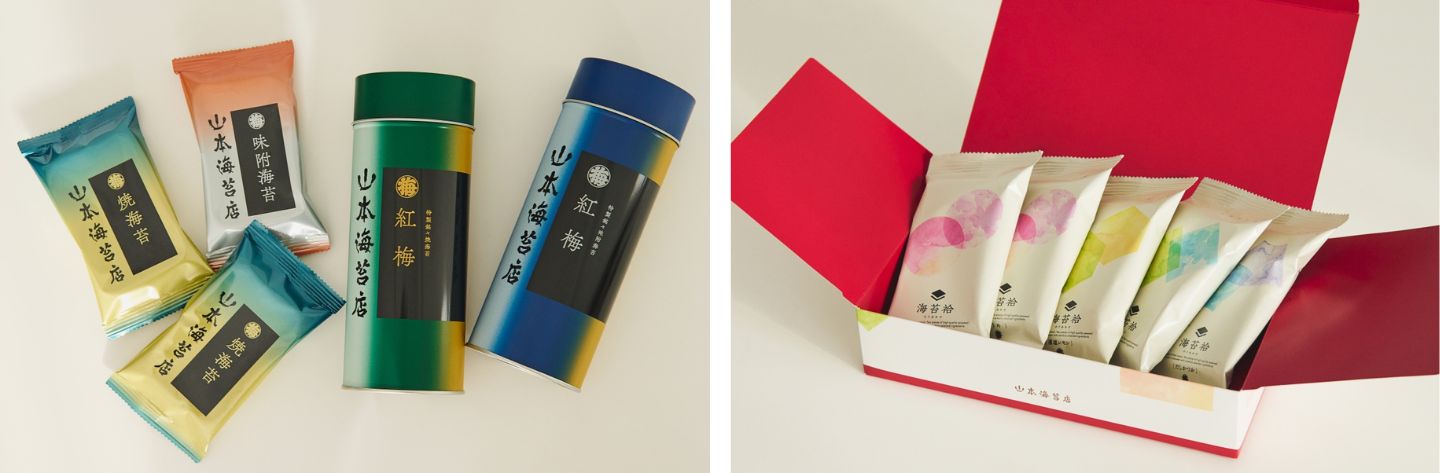
From left: Meimei Yaki Nori, Meimei Ajitsuke Nori, Koubai (roasted nori and ajitsuke nori), and Nori Awase, designed with traditional Japanese color pairings. Proposals emphasizing a distinctly Japanese aesthetic, made in collaboration with experts from the Edo Tokyo Kirari Project, have informed the development of new products and services.
Another reform Yamamoto Noriten has undertaken in response to changing times is the expansion of sales channels. “As the midyear and year-end gift market has declined by about 70 percent since its peak during the bubble economy of the 1980s, we developed products and packaging at more accessible price points and expanded retail presence to train stations, airports, service areas, and theme parks. By offering individually wrapped products, seasonal wrapping paper, and collaborations with character brands, we strengthened our souvenir lineup and worked to create purchasing opportunities for customers throughout the year.”
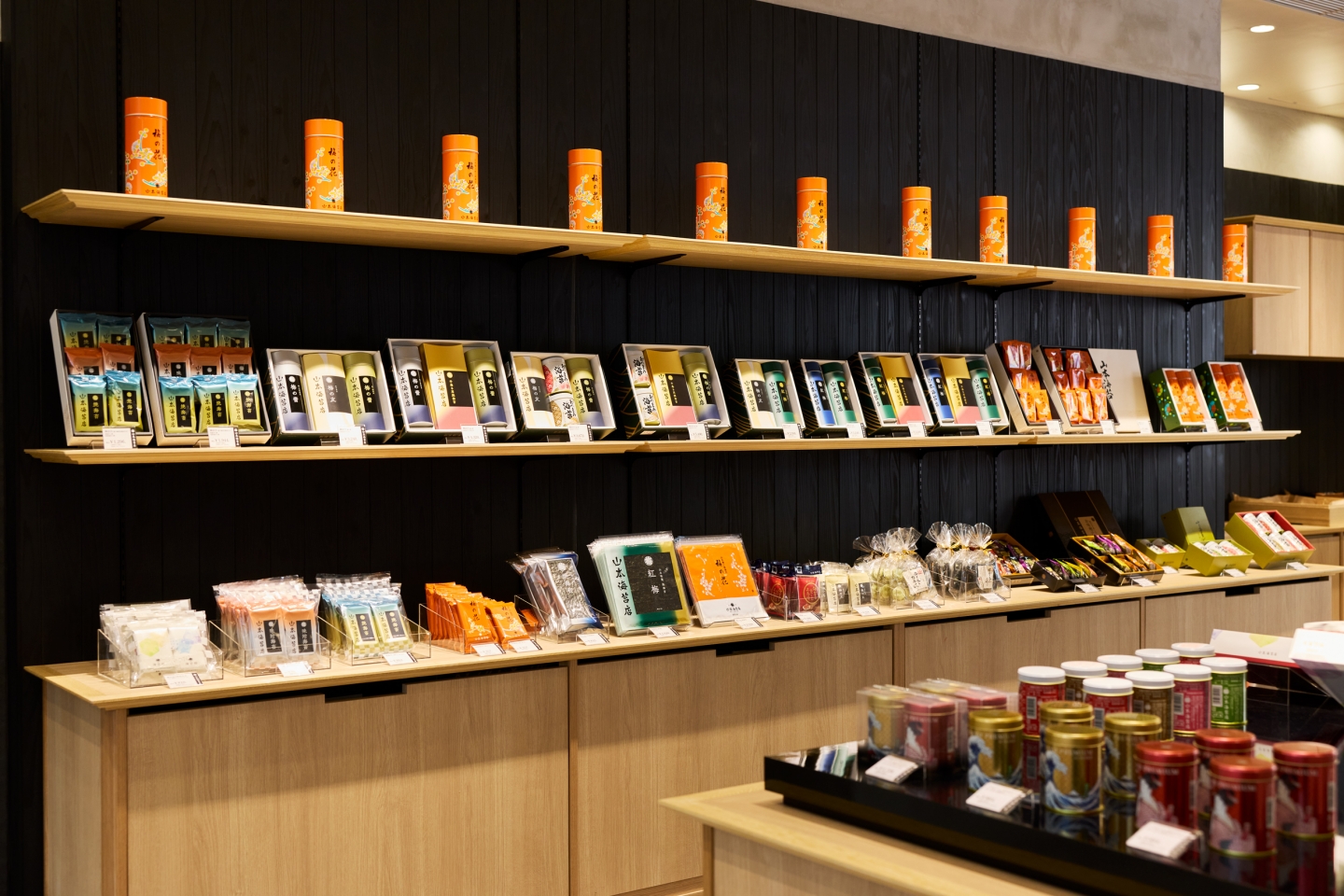
The interior of the Nihonbashi Main Store, relocated nearby in November 2025. The layout is designed to make it easy for customers to browse and combine products.
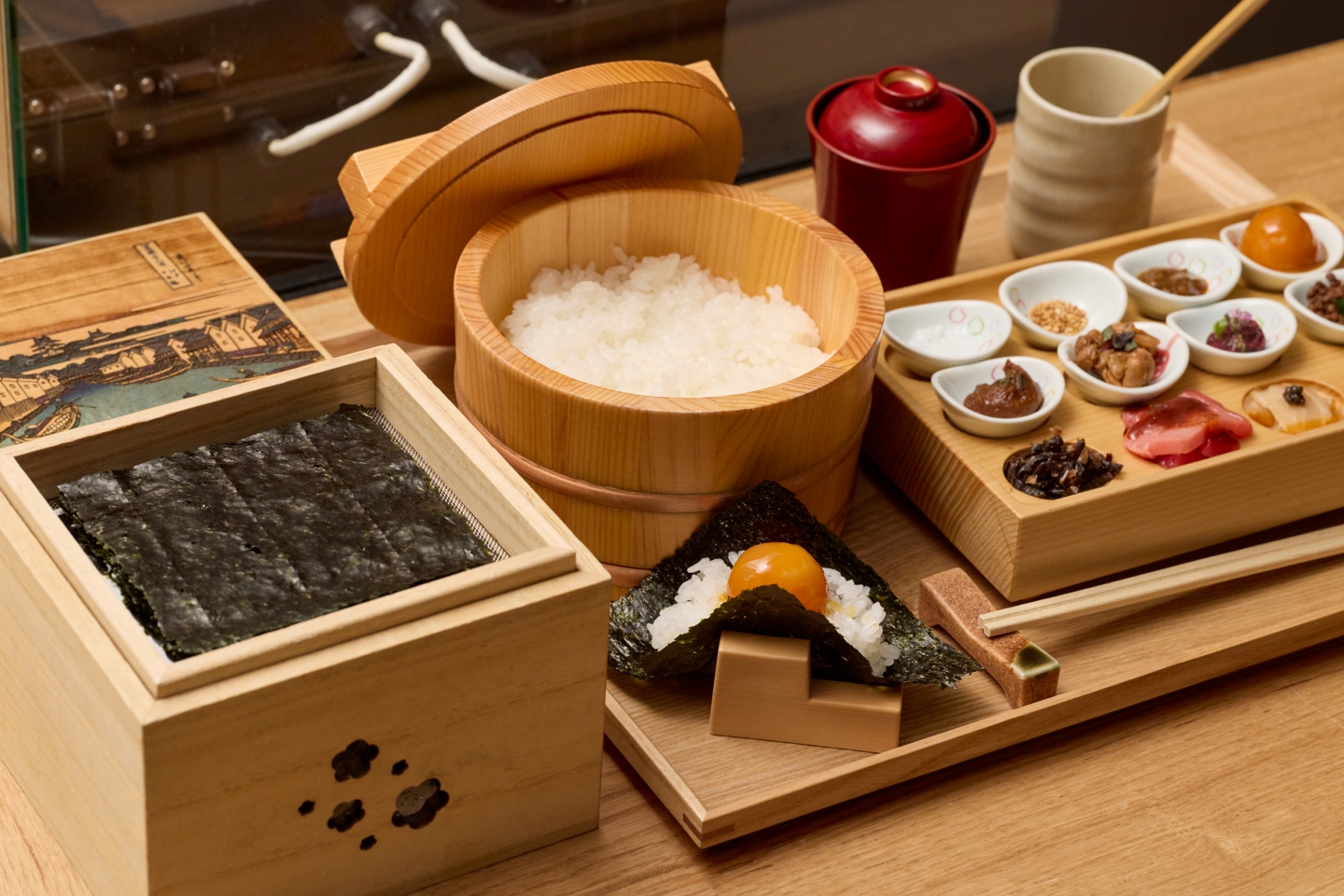
The Nihonbashi 1000-Year Temaki (3,630 yen), available at Temaki YAMAMOTO. An original charcoal-grilled nori box used to warm the seaweed over charcoal (left). While the size differs, a Yaki Nori Box (Miyako charcoal set) is also sold in-store and online for 18,370 yen, and some customers purchase it after dining.
In November 2025, the main store relocated nearby in response to redevelopment in Nihonbashi. Seeking to share the deliciousness of freshly roasted nori with more people, Yamamoto opened the company’s first restaurant, Temaki YAMAMOTO, within the new main store. At Temaki YAMAMOTO, sheets of Ume no Hana nori are roasted to order in front of customers. They are served with rice in a woodenohitsuand 12 varieties of fillings. Two different temaki sets are available at the counter, each supervised by a different culinary expert: Kimio Nonaga of Nihonbashi Yukari and Yumiko Ukon of Onigiri Bongo. The opportunity to savor aromatic nori in such a luxurious manner has already drawn large crowds day after day.
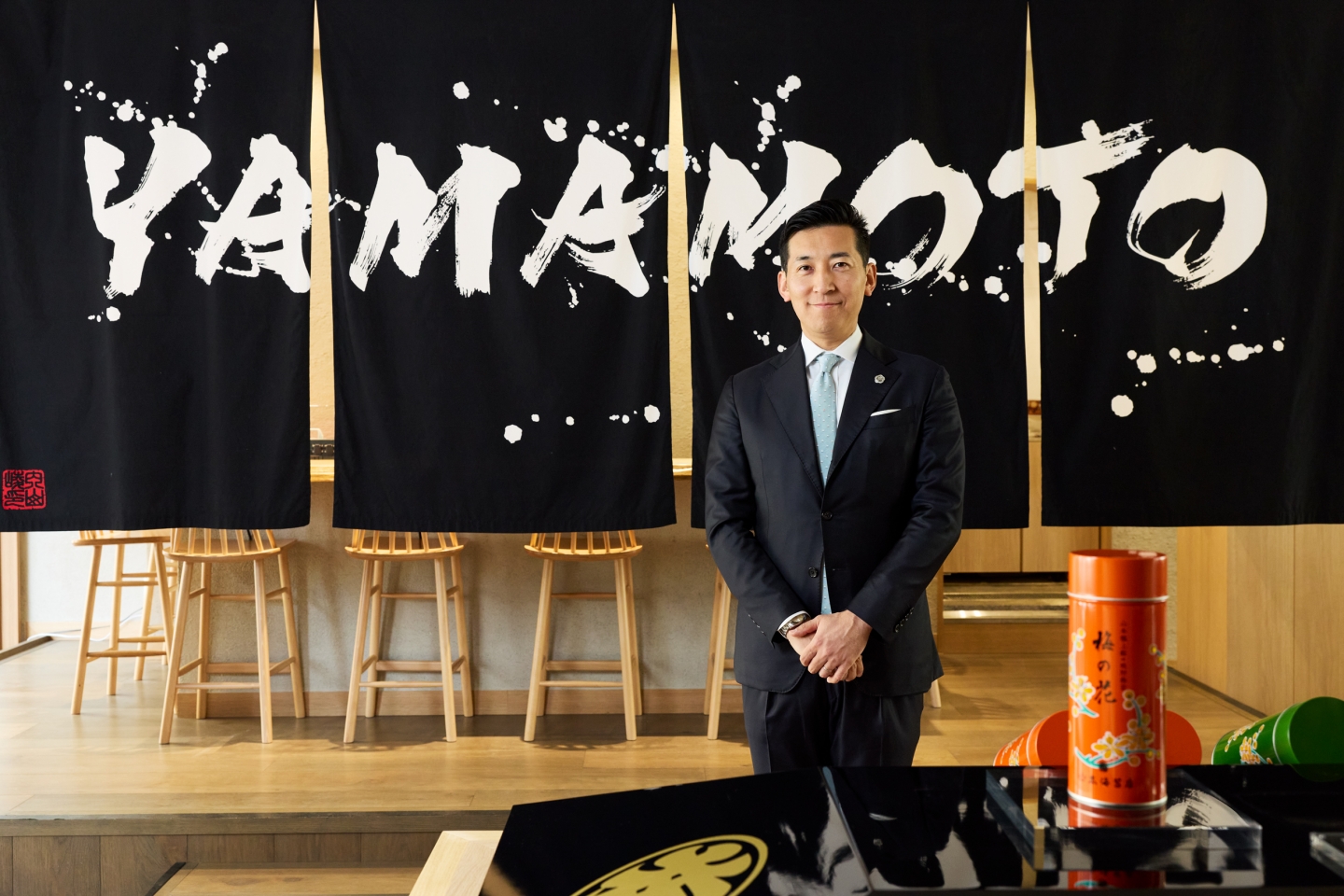
Takahiro Yamamoto stands before the counter of Temaki YAMAMOTO, where the highest-grade nori is served. “In Nihonbashi, home to many renowned and long-established establishments, we will continue sharing the deliciousness of nori with audiences in Japan and abroad.”
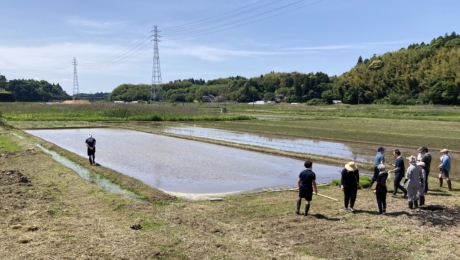
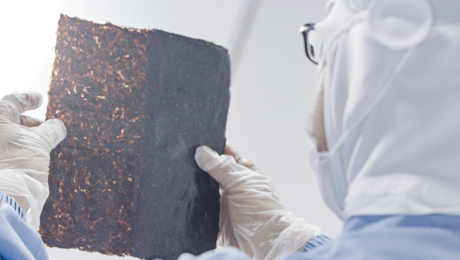
“There are many grades of nori, but the nori offered by Yamamoto Noriten stands apart for its crisp texture and smooth melt-in-the-mouth quality,” Yamamoto says. “We support fishermen who produce the finest nori using the traditional pole cultivation method long practiced in the Ariake Sea. To deliver high-quality nori to more customers, we will continue refining our design, developing new products, and adapting our sales formats to meet modern needs.”
Looking ahead to the planned completion of the redevelopment area in six years, Yamamoto expresses anticipation for once again flourishing at the company’s original founding site. From a revitalized Nihonbashi, Yamamoto Noriten continues to communicate the appeal of nori through new initiatives—bringing its long-established quality to a wider domestic and international audience while carrying tradition into the future.